What is a Voltage divider? Function, Formula, Application
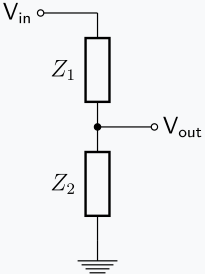
2Q@TDF%WQVPE~P8S~PK8N)D

Catalog

1.What is a Voltage divider?
2.How a Voltage divider works?

3.What is a voltage divider circuit?
4.Voltage divider Applications

5.What is Voltage divider calculator?

6.What is the most effective component in a voltage divider?

7.What is the function of a fixed resistor in the potential divider?


1.What is a Voltage divider?
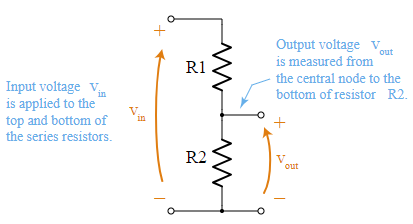
A voltage divider is a simple electronic circuit that divides an input voltage into smaller fractions. It is a fundamental circuit element used in various electronic devices and systems. The voltage divider consists of two or more resistors connected in series, with the output voltage taken from the junction between the resistors.


2.How a Voltage divider works?

The principle behind a voltage divider is based on the concept of voltage division. According to Ohm's Law, the voltage across a resistor is proportional to the current flowing through it. In a voltage divider circuit, the total current flows through the series resistors, and the voltage drop across each resistor is proportional to its resistance value.


The output voltage of the voltage divider is determined by the ratio of the resistor values. The higher the resistance value of a resistor, the larger the voltage drop across it. By carefully selecting the resistor values, it is possible to obtain a desired output voltage from an input voltage source.


3. Formula

The formula/equation for calculating the output voltage of a voltage divider is:

· Vout = Vin * (R2 / (R1 + R2))


where Vout is the output voltage, Vin is the input voltage, R1 is the resistance of the first resistor, and R2 is the resistance of the second resistor.


And there is also another version of the equation, it is similar to the one above:

Vout = (Rout/Rt) x Vin, where:

· Rout = Resistance across the output
· Rt = Total resistance of the circuit
Vout = (Resistance across the output / Total resistance of the circuit) x Vin.

Assuming that the voltage we want to know is V1, we clear this value. V1 = (Vin)(R1)/Rs. We can find V2 and V3 in the same way, using the corresponding resistor value.

Voltage divider Examples

Using the following values: R1 = 1K, R2 = 2K, R3 = 3K and Vin = 12 volts.

1. If we want to know the voltage across resistor R3.

· Vout = Vin x R3 / ( R1 + R2 + R3)

· Vout = 12V x 3K / (1K + 2K + 3K)

· Vout = 12V x 3K / 6K = 12V / 2 = 6V

2. If we want to know the voltage cross resistor R1.

· Vout = Vin x R1 / ( R1 + R2 + R3)

· Vout = 12V x 1K / (1K + 2K + 3K)

· Vout = 12V x 1K / 6K = 12V / 6 = 2V


4. What is a voltage divider circuit?
TD(638_ENKC%BZ`O2~HWM44


5.Voltage Divider Applications


Voltage dividers find wide applications in various electronic systems and devices. Some common applications of voltage dividers include:


1. Level Shifting: Voltage dividers can be used to shift the voltage level of a signal. By adjusting the resistor values, the input voltage can be scaled down or up to match the desired voltage level for a particular circuit or component.


2. Sensor Interface: Voltage dividers are often used to interface sensors with microcontrollers or analog-to-digital converters (ADCs). Sensors typically provide a voltage output proportional to the measured quantity. A voltage divider can be employed to scale down the sensor output voltage to a range compatible with the input requirements of the microcontroller or ADC.


3. Biasing Transistors: Voltage dividers are commonly used in transistor biasing circuits. They help establish a specific voltage at the base or gate terminal of the transistor, ensuring proper operating conditions.


4. Reference Voltage Generation: Voltage dividers can be employed to generate reference voltages for various purposes, such as providing a stable voltage reference for analog circuits or establishing a voltage reference for comparison in control systems.


6. What is Voltage Divider Calculator?


To simplify the calculation of voltage dividers, online calculators and software tools are available. These tools require the input voltage and the resistor values, and they provide the output voltage. By using these calculators, engineers and hobbyists can quickly determine the resistor values needed to achieve a desired output voltage.


7.What is the most effective component in a voltage divider?

The most effective component in a voltage divider is the resistor. The resistor determines the division ratio and plays a crucial role in determining the output voltage. By selecting appropriate resistor values, the desired output voltage can be achieved.


8.What is the function of a fixed resistor in the potential divider?


The function of a fixed resistor in a potential divider (another term for a voltage divider) is to determine the division ratio and control the output voltage. The fixed resistor, also known as the load resistor, remains constant and determines the lower boundary of the resistance in the voltage divider circuit. By selecting the appropriate value for the fixed resistor, the desired output voltage can be achieved based on the ratio between the fixed resistor and the variable resistor(s) in the circuit.


A voltage divider circuit is a circuit configuration that consists of two or more resistors connected in series. It is used to divide an input voltage into smaller fractions. The output voltage is taken from the junction between the resistors. A voltage divider circuit does not necessarily require a transistor. It can be implemented using resistors alone.


However, in certain applications, voltage dividers may be used in conjunction with transistors. Transistors can be employed to buffer the output voltage and provide additional functionalities such as amplification or signal conditioning. The transistor acts as an active element in the circuit, modifying the voltage division characteristics and enabling more complex circuit designs.


Frequently Asked Questions

Why is voltage divider bias called a self-biased circuit?
Voltage divider bias is called a self-biased circuit because it generates the bias voltage required for the transistor biasing within the circuit itself, using resistors. This eliminates the need for an external power supply or separate biasing circuitry. The voltage divider network sets the base bias voltage for the transistor, ensuring it operates in the active region. By adjusting the resistor values in the voltage divider, one can control the transistor’s operating point.
Can you explain how the resistor values affect the output voltage in a voltage divider?
In a voltage divider circuit, the output voltage$ ( V_{out} ) $ can be calculated using the formula: $ V_{out} = V_{in} \times \left( \frac{R_{2}}{R_{1} + R_{2}} \right) $ Where: $( V_{in} ) $ is the input voltage $( R_{1} ) and ( R_{2} ) $ are the resistor values in the voltage divider circuit The ratio of ( R_{2} ) to ( R_{1} + R_{2} ) determines how much of the input voltage is dropped across ( R_{2 ) and thus affects the output voltage. If ( R_{2} ) is much smaller than ( R_{1} ), a larger portion of the input voltage will be dropped across ( R_{2 ) and the output voltage will be closer to the input voltage. Conversely, if ( R_{2} ) is much larger compared to ( R_{1} ), only a small portion of the input voltage will be present at the output.
How can I calculate the output voltage of a voltage divider circuit?
The output voltage of a voltage divider circuit can be calculated using the following formula: Vout = Vin * (R2 / (R1 + R2)) where: Vout is the output voltage Vin is the input voltage R1 is the resistance of the first resistor in the voltage divider R2 is the resistance of the second resistor in the voltage divider For example, if you have a voltage divider circuit with Vin = 10V, R1 = 1kΩ, and R2 = 2kΩ, the output voltage would be: Vout = 10V * (2kΩ / (1kΩ + 2kΩ)) = 6.67V
What are some common applications where voltage dividers are used in conjunction with transistors?
Biasing transistors: Voltage dividers are used to provide a stable DC voltage to the base of a transistor, which is necessary for proper biasing. Creating reference voltages: Voltage dividers can be used to create a stable reference voltage for other circuits, such as comparators or analog-to-digital converters. Level shifting: Voltage dividers can be used to shift the voltage level of a signal to make it compatible with other circuits. Attenuating signals: Voltage dividers can be used to reduce the amplitude of a signal, which can be useful for protecting sensitive circuits or for matching impedance levels.
What is a voltage divider circuit? Does it need a transistor?
Yes So as you can see in the last paragraph
How do I divide voltage in high voltage applications?
In high voltage applications, voltage division can be achieved similarly to low voltage circuits but with some considerations: Use High Voltage Resistors: Ensure that the resistors used can withstand the high voltage levels without breakdown. Isolation: In high voltage environments, isolation techniques such as optocouplers or transformers may be used to divide voltages while maintaining electrical separation. Safety: Given the risks associated with high voltages, safety precautions and insulation must be carefully implemented to prevent electrical hazards.

Related Articles

Multivibrators,Astable Oscillator,Crystal Oscillator:Distinction

Release time:2024-05-08       Page View:591
CatalogOscillatorWhat isMultivibrator?What is Astable Oscillator?What is Crystal Oscillator?Types of MultivibratorsTitle: Multivibrators, Astable Oscillator, Crystal Oscillator: How to Differentiate?Introduction:In the vast realm of electronics, oscillators play a crucial role in generating repetitive waveforms. They find applications ...

TVS Diode Types,Working Principle,Testing,Selection

Release time:2024-05-06       Page View:1984
This post will make you Understand TVS DiodesTypes, Working Principle, Testing, and Selection

Ryzen 9 7950X3D vs 7900X3D,7950X,7900X,5950X,5900X,3950X,3900X

Release time:2024-05-06       Page View:648
This post is about Battle of the Titans: Ryzen 9 7950X3D vs. 7900X3D, 7950X, 7900X, 5950X, 5900X, 3950X, 3900X

Mastering GND in Circuits: Essential Guide for Safety

Release time:2024-05-05       Page View:1950
Explore the significance of GND, circuit gnd, and gnd wire in ensuring safety and stability within electrical systems. Learn to effectively manage grounding in your circuit designs.

Electronica 2024:Munich Electronic Components Exhibition

Release time:2024-04-19       Page View:636
Munich, Germany is set to host the prestigious Electronica, the international electronics and electronic components exhibition, from November 12th to November 15th, 2024. Held at the Neue Messe München exhibition center, the event promises to be a grand showcase of cutting-edge technology and industry trends.Electronica, which takes place every tw...

Vess Electronics Component Distributor at ExpoElectronica 2024

Release time:2024-04-09       Page View:692
Vess Electronics to Showcase Cutting-Edge Electronic Components at ExpoElectronica 2024Vess Electronics, a leading global electronic componentsdistributor, is delighted to announce its participation in the upcoming ExpoElectronica 2024, held at the prestigious Crocus Expo IECin Moscow, Russia. From April 16-18, 2024, Vess Electronics ...

Fuses Choosing Tutorial Top 10 Fuses Recommendation For 2024

Release time:2024-04-01       Page View:1018
Fuses Choosing Tutorial | Top 10 Fuses Recommendation For 2024**Introduction**Fuses are essential safety devices used to protect electrical circuits from overcurrent and short circuits. Choosing the right fuse for a particular application is crucial to ensure the safety and reliability of the circuit. This tutorial will provide a comprehensive gui...

How to Choose RTC Real Time Clock? Structure,Operation,Types

Release time:2024-03-28       Page View:1385
Real Time Clocks This post we will shed a light on what time clock rtc module is and how RTC work, RTC construction, operation and more FAQs like real time clock in arduino, raspberry pi real time clock you want to know.

Step Recovery Diode: Symbol, Types, and Applications

Release time:2024-03-22       Page View:722
This article provides an overview of step recovery diode (SRD), the types, applications and its operation.

MEMS accelerometer:Working, Application, Pros & Cons

Release time:2024-03-15       Page View:694
Exploring the World of MEMS Accelerometers: Function, Applications, and PricingIntroduction:MEMS (Micro-Electro-Mechanical Systems) accelerometers have revolutionized the field of motion sensing and contributed to the development of countless electronic devices. These tiny, versatile sensors enable precise and accurate measurement of acce...

What are the 4 Types of Filters?Distinction & Selection Tutorial

Release time:2024-03-11       Page View:1146
Introduction:Hall effect sensors are widely used for various sensing applications, ranging from position sensing to current measurement. The A3141, A3142, A3143, and A3144 are popular Hall effect sensor models manufactured by Allegro Microsystems. While they may appear similar at first glance, each sensor in this series offers unique features and ...

How To Size Surge Protection Device?

Release time:2024-03-05       Page View:815
Surge Protective DeviceHow Do Surge Protection Devices Work?3 Phase Surge Protection DeviceWhat Is Eaton Brnsurge Type Br Whole-Panel Circuit Breaker Surge Protective Device?Type 1 Surge Protection DeviceType 2 Surge Protection DeviceA Type 1 Surge Protection Device (SPD), also known as a Type 1 Surge Arrester, ...
RFQ