Step Recovery Diode: Symbol, Types, and Applications
As a professional electronics enthusiast, I've always been fascinated by the unique capabilities of various semiconductor devices. One component that has particularly caught my attention over the years is the nifty little devices step recovery diode (SRD) . This article provides an overview of SRD, the types, applications and its operation.

What is a Step Recovery Diode?
In the world of electronics, a step recovery diode is a semiconductor device that exhibits a distinctive voltage-current characteristic. Unlike a traditional diode, which has a gradual transition between the forward-biased and reverse-biased states, an SRD has a rapid, "step-like" transition. This unique behavior is what gives the step recovery diode its name and makes it useful for a variety of applications.
I still remember the first time I encountered a step recovery diode in one of my electronics projects. I was trying to build a high-frequency signal generator, and a colleague recommended I give SRDs a try. At first, I was a bit skeptical – how could this little component make such a difference? But once I started experimenting with it, I was hooked. The ability to generate clean, fast-rising pulses and harmonics was a game-changer for my project.
Step Recovery Diode Symbol

The Step Recovery Diode symbol used to represent a step recovery diode is similar to the standard diode symbol, but with an additional label or designation to differentiate it. Typically, you'll see the letters "SRD" or "SSD" (for "snap-off diode") written next to the diode symbol to indicate that it's a step recovery diode.
This subtle difference in the symbol is a good reminder that SRDs are not your average run-of-the-mill diodes. They have their own unique characteristics and capabilities that set them apart from their more common counterparts.
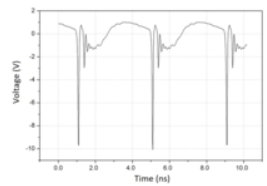
Types of Step Recovery Diodes
Step recovery diodes come in a few different varieties, each with its own strengths and applications:
² Silicon Step Recovery Diodes
These are the most common type of SRDs, made from good old silicon semiconductor material. Silicon SRDs are a great all-around choice for many applications and tend to be relatively affordable.
² Germanium Step Recovery Diodes
Germanium-based SRDs have a faster switching speed compared to their silicon brethren, but they also have a lower reverse breakdown voltage. I've used germanium SRDs in some of my high-frequency projects where the extra speed was crucial.
² Gallium Arsenide (GaAs) Step Recovery Diodes
For the ultimate in speed and performance, GaAs step recovery diodes are the way to go. These devices offer even faster switching times and higher reverse breakdown voltages, making them ideal for use in high-frequency circuits and systems.
I'll admit, the first time I worked with a GaAs SRD, I was a bit intimidated. The performance was mind-blowing, but they also require a bit more care and handling compared to silicon or germanium options. But once you get the hang of it, the results are well worth the effort.
Or we can divide Step Recovery Diodes into 1. Epitaxial Step Recovery Diodes:
2. Schottky Step Recovery Diodes:
Step recovery diodes (SRDs) are specialized diodes designed for high-speed switching applications. They are commonly used in various electronic circuits, such as voltage multipliers, comb generators, and pulse-forming networks. There are two main types of step recovery diodes:
1. Epitaxial Step Recovery Diodes:
Epitaxial step recovery diodes are formed by epitaxially growing a lightly doped n-type layer on top of a heavily doped p-type substrate. This structure creates a one-sided abrupt junction, which is essential for the step recovery behavior. Examples of epitaxial step recovery diodes include:
- Silicon Epitaxial Step Recovery Diodes (Si-ESRDs)
- Gallium Arsenide Epitaxial Step Recovery Diodes (GaAs-ESRDs)
2. Schottky Step Recovery Diodes:
Schottky step recovery diodes are formed by creating a metal-semiconductor junction between a metal and a lightly doped semiconductor material, typically silicon. The Schottky barrier junction exhibits step recovery behavior due to the depletion region formed at the metal-semiconductor interface. Examples of Schottky step recovery diodes include:
- Silicon Schottky Step Recovery Diodes (Si-SSRDs)
- Gallium Arsenide Schottky Step Recovery Diodes (GaAs-SSRDs)
Both types of step recovery diodes exhibit similar step recovery behavior, but they differ in their fabrication process and material properties. Epitaxial step recovery diodes generally have lower forward voltage drop and higher reverse breakdown voltage compared to Schottky step recovery diodes. However, Schottky step recovery diodes have faster switching times and lower reverse recovery times.
The choice between epitaxial and Schottky step recovery diodes depends on the specific application requirements, such as operating frequency, voltage levels, switching speed, and power handling capabilities. Epitaxial step recovery diodes are often preferred for high-voltage applications, while Schottky step recovery diodes are commonly used in high-frequency and low-voltage applications.
Step Recovery Diodes Classification
classification of step recovery diode
Step recovery diodes (SRDs) can be classified based on different criteria, including their material composition, structure, and intended application. Here are some common classifications of step recovery diodes:
Material Composition:
Silicon Step Recovery Diodes (Si-SRDs)
Gallium Arsenide Step Recovery Diodes (GaAs-SRDs)
Silicon-Germanium Step Recovery Diodes (SiGe-SRDs)
Junction Structure:
Epitaxial Step Recovery Diodes (ESRDs)
Schottky Step Recovery Diodes (SSRDs)
Fabrication Process:
Planar Step Recovery Diodes
Mesa Step Recovery Diodes
Breakdown Voltage:
Low Voltage Step Recovery Diodes
Medium Voltage Step Recovery Diodes
High Voltage Step Recovery Diodes
Switching Speed:
Fast Step Recovery Diodes
Ultra-Fast Step Recovery Diodes
Power Handling Capability:
Low Power Step Recovery Diodes
High Power Step Recovery Diodes
Application:
Pulse Forming Step Recovery Diodes
Harmonic Generation Step Recovery Diodes
Frequency Multiplier Step Recovery Diodes
Comb Generator Step Recovery Diodes
Applications of Step Recovery Diodes
Step recovery diodes have a wide range of applications in the world of electronics, and I've had the pleasure of using them in a variety of projects over the years. Here are some of the key areas where SRDs shine:
Ø Frequency Multiplication
One of the most common uses for step recovery diodes is in frequency multiplier circuits. The rapid transition of an SRD can be used to generate higher-order harmonics from a fundamental input frequency, allowing you to create signals at multiples of the original frequency.
I've used this technique in RF and microwave projects, where I needed to generate high-frequency signals from a more manageable lower-frequency source. The ability to cleanly multiply the frequency without introducing too much noise or distortion is a real boon.
Ø Pulse Shaping
The fast switching capability of step recovery diodes also makes them useful for generating clean, high-amplitude pulses. I've seen them used in everything from radar systems to high-speed logic circuits, where the ability to create sharp, well-defined pulses is essential.
One of my favorite projects was building a pulse generator circuit using a step recovery diode. The results were impressive – I was able to generate pulses with rise and fall times in the nanosecond range, which came in handy for some of my high-speed digital experiments.
Ø Timing and Trigger Circuits
Another area where step recovery diodes shine is in timing and trigger applications. The rapid transition of an SRD can be used to create precise timing signals or trigger events in a wide range of electronic systems.
I've used SRDs in oscilloscope circuits, where their fast switching helps to ensure accurate triggering and stable waveform capture. They've also proven useful in various types of timing circuits, such as those found in security systems or industrial control equipment.
Ø Microwave and RF Circuits
Step recovery diodes are particularly well-suited for use in high-frequency microwave and RF circuits. Their fast switching capabilities and high-frequency performance make them valuable components in mixers, modulators, and harmonic generators.
One of my most challenging projects involved integrating SRDs into a complex microwave radar system. The ability to generate and process high-frequency signals was crucial, and the step recovery diodes played a key role in making that system work reliably.
Ø Switching and Rectification
While not as common as their use in high-frequency applications, step recovery diodes can also be employed for switching and rectification in power supply and power conversion circuits. Their unique voltage-current characteristics can be leveraged to create efficient, high-speed switching and rectification solutions.
I've used SRDs in a few power supply designs, where their fast switching helped to improve efficiency and reduce noise and ripple. It's not their primary use, but it's definitely a capability worth considering if you're working on power-related projects.
Advantages and Disadvantages of Step Recovery Diodes
Like any electronic component, step recovery diodes have their own set of advantages and disadvantages. On the plus side, their fast switching, high-frequency performance, and ability to generate clean pulses and harmonics make them invaluable in a variety of applications. However, they can also be a bit more delicate and require more care in handling compared to their more common diode counterparts.
One of the key advantages of SRDs is their ability to operate at much higher frequencies than traditional diodes. This makes them ideal for use in high-speed digital circuits, microwave systems, and other applications where fast switching is a must.
On the downside, step recovery diodes can be a bit more sensitive to things like temperature and voltage variations, and they may require more complex driving circuitry to ensure optimal performance. Additionally, they can be more expensive than standard diodes, depending on the specific type and application.
But overall, I've found that the benefits of step recovery diodes far outweigh the drawbacks, especially when you're working on projects that require their unique capabilities. With a bit of care and the right driving circuitry, they can be a powerful tool in the electronics engineer's toolkit.
Conclusion
Step recovery diodes may not be the most well-known semiconductor components out there, but they are certainly among the most versatile and capable. From frequency multiplication to high-speed pulse generation, these little devices pack a punch when it comes to specialized applications.
If you're working on any projects that involve high-frequency signals, fast switching, or the need for clean, well-defined pulses, I'd highly recommend giving step recovery diodes a closer look. With a bit of experimentation and the right driving circuitry, you might be surprised at what these remarkable components can do.
So, the next time you're tackling an electronics project that could use a little extra oomph, don't forget about the humble step recovery diode. It just might be the secret sauce you need to take your design to the next level.
Sources:
- [Step Recovery Diode Wikipedia](https://en.wikipedia.org/wiki/Step-recovery_diode)
- [Step Recovery Diode Applications](https://www.electronics-tutorials.ws/diode/diode_7.html)
- [Step Recovery Diode Characteristics and Modeling](https://www.ece.uic.edu/~tbao/ece446/Lectures/Lect21_SRD.pdf)


Related Articles

Multivibrators,Astable Oscillator,Crystal Oscillator:Distinction
TVS Diode Types,Working Principle,Testing,Selection
Ryzen 9 7950X3D vs 7900X3D,7950X,7900X,5950X,5900X,3950X,3900X
Mastering GND in Circuits: Essential Guide for Safety
Electronica 2024:Munich Electronic Components Exhibition
Vess Electronics Component Distributor at ExpoElectronica 2024
Fuses Choosing Tutorial Top 10 Fuses Recommendation For 2024
How to Choose RTC Real Time Clock? Structure,Operation,Types
Step Recovery Diode: Symbol, Types, and Applications
MEMS accelerometer:Working, Application, Pros & Cons
What are the 4 Types of Filters?Distinction & Selection Tutorial