Mastering GND in Circuits: Essential Guide for Safety
yyseo Release time:2024-05-05 Page View:1916

What is gnd
"GND" stands for "ground" within the context of electronic circuits. It represents a common return path for electric current, or a direct physical connection to the earth. It's essential in the design of electrical and electronic circuits to provide a safe path for electricity to prevent unwanted buildup of voltages that could be hazardous.
What is a gnd wire
A GND wire, or ground wire, is fundamentally important in electrical and electronic systems. It's used to connect parts of an electric circuit to the ground, thereby providing a path for electrical current to safely dissipate into the earth in case of a short circuit or other electrical faults. This helps protect both the equipment and the users from electric shocks.
The Role and Importance of Grounding
Ground wires serve two primary purposes in electrical systems: functional grounding and safety grounding.
Functional Grounding: This type of grounding is used to improve the stability and performance of the electronic system. It helps in maintaining a consistent voltage level across the components and minimizes the noise in the circuits.
Safety Grounding: More crucially, safety grounding protects users. It prevents the equipment's casing from becoming electrified if a fault occurs within the system. This is typically achieved by connecting the ground wire to the chassis or frame of the device.
In practical applications, ground wires are often marked with a yellow-green stripe, adhering to international wiring color codes. This distinct marking ensures that anyone working with or around electrical installations can easily identify the ground connections, thereby enhancing safety during installation, troubleshooting, and repairs.
Is gnd positive or negative
The keyword "Is gnd positive or negative" leads to an important clarification: GND is typically the negative side of a power supply system in single power source circuits. This means GND is usually at zero volts (0V), and it acts as a reference point for measuring potential differences within the circuit. GND isn’t necessarily connected to the earth; rather, it’s assumed as a virtual ground for application purposes.
What is GND in a Circuit?
Ground, abbreviated as GND in electronic circuits, serves as the 0V reference point that provides a common return path for electric current. It is essential in reducing mutual interference among different circuit components, ensuring stable and reliable operation. Understanding the various types of GND can greatly enhance the effectiveness of circuit design and troubleshooting.
Analog Ground (AGND)
Analog Ground (AGND) is primarily used in analog circuits, such as those involving ADCs (Analog-to-Digital Converters) for sensors and operational amplifier circuits. In these circuits, signals are typically weak and highly susceptible to noise from other electrical currents. A dedicated AGND helps minimize voltage drops caused by large currents, which can distort the analog signals and potentially disrupt circuit functionality.
Digital Ground (DGND)
Digital Ground (DGND), in contrast, is used in digital circuits, like those found in microcontrollers, USB communication interfaces, and button detection circuits. Digital circuits operate with discrete signals that switch between high (1) and low (0) states. During these transitions, the changing voltages can induce electromagnetic fields, leading to electromagnetic compatibility (EMC) radiation. To mitigate EMC effects and isolate the digital circuitry, a separate DGND is used.
Power Ground (PGND)
Power Ground (PGND) is designated for high-power circuits, such as those driving motors or solenoids. These circuits typically deal with high current flows, which can lead to significant ground shifts—a phenomenon where the intended ground voltage level shifts due to large current paths. Such shifts can alter the voltage levels across the circuit, potentially leading to malfunction. For example, a circuit designed to operate at 5V relative to ground can effectively drop to 4V if the ground reference shifts by 1V due to high current flow. To mitigate these effects, PGND is used as a separate grounding reference, ensuring that high currents do not interfere with the lower power parts of the circuit.
Power Supply Ground (GND)
The Power Supply Ground, often simply referred to as GND, acts as the ultimate reference point of 0V for all types of grounds in a circuit, including AGND, DGND, and PGND. It is crucial because it consolidates all various ground references into a unified ground plane. This unification is essential for maintaining the overall stability and integrity of the electrical system.
AC Ground (CGND)
AC Ground, or Chassis Ground (CGND), is often found in circuits that include both AC (Alternating Current) and DC (Direct Current) components, such as in power supplies that convert AC to DC. The front stage of these circuits typically handles AC power, requiring a separate grounding system from the DC sections to manage different potentials and safety requirements.
CGND serves as the 0V reference point for the AC portion of the circuit. It is crucial for safety, ensuring that any stray AC currents do not pose a hazard to users or equipment. Typically, to maintain circuit integrity and safety, engineers may connect the CGND to the DC ground through components like coupling capacitors or inductors, which helps in filtering and stabilizing the ground reference throughout the circuit.
Earth Ground (EGND)
Earth Ground (EGND) is a critical safety feature in electrical systems, particularly those handling high voltages or currents, such as in domestic appliances like fans, refrigerators, and televisions. EGND is connected directly to the earth and plays a pivotal role in protecting against electrical shock and ensuring operational safety.
The primary function of EGND is to act as a fail-safe path for electrical currents. In scenarios where insulation fails or wiring defects occur, EGND provides a direct path to the earth, significantly reducing the risk of electric shock to users. It also helps in stabilizing the electrical system by dissipating any electrical surges or stray currents, thereby protecting the equipment and enhancing safety.
Explaining VCC, VDD, and Grounding in Simple Terms
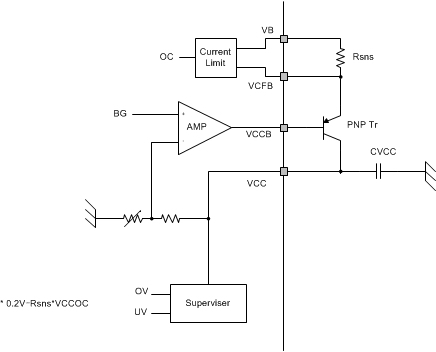
When we work with electronic gadgets, it's important to know about where the power comes from and how it's connected. Two common terms you'll hear are "VCC" and "VDD." These are types of power supplies in electronics. We also need to understand "grounding" or "GND," which is like the electrical safety net for your devices.
What are VCC and VDD?
VCC and VDD: Power Supply Terms
VCC: This stands for the power voltage that goes to a type of component called bipolar devices. Think of it as the positive energy supply for parts like some types of transistors.
VDD: This is similar to VCC but is used mostly for a group of components known as MOS transistors. These parts need a positive voltage, and that's what VDD provides.
These terms are helpful to know because they tell you about the power needs of different parts of your electronics. Each part needs a specific type of voltage to work right without getting damaged.
Understanding Grounding (GND)
"What is GND and VCC?" Well, if VCC and VDD are about providing power, GND is about safety and stability. It's the zero point or neutral spot in an electrical system, often called the "ground."
GND: Short for "ground," this is the reference point in an electrical system that all other voltages are measured against. It's like the Earth in our electrical system—everything electrically stable and safe returns here.
Why Grounding Matters
Imagine you're setting up a bunch of party lights. If the wires aren't secured well, they might touch each other and cause a short or even start a fire. Grounding in an electronic system helps prevent electrical mishaps like this. It gives unwanted electricity a safe path back to the ground instead of zapping your electronic components.
Grounding can be different based on what part of the system we're talking about:
Digital Ground: This is for digital components like computer chips, providing a stable zero voltage so they operate correctly.
Analog Ground: Used for parts that handle continuous signals like sounds or radio waves, ensuring they don't get interference from other electronic noise.
Signal Ground: This is often used for sensors; it helps them send accurate data by keeping them at a stable reference point.
Key Points to Remember
VCC is generally the power for bipolar devices, and it’s positive.
VDD is typically the positive power for MOS transistors.
GND or ground is crucial for safe and stable operation of all electronic systems.
Understanding these basics helps you grasp how electronics work and why proper wiring and grounding are key to keeping your devices running smoothly and safely. Whether it's a simple radio or a complex computer, knowing these terms can help you better understand the technology around you.
Grounding Essentials for Control Systems: Simplified Practices
When it comes to designing and maintaining control systems in electronics, understanding how to properly ground the system is crucial. Grounding can get pretty complex, but here, we’ll break it down into simpler terms focusing on two key aspects: the grounding practices for different frequencies and the need to separate AC ground from signal ground.
Grounding Based on Frequency
Grounding might sound like it’s just about connecting parts of your circuit to the earth, but it’s a lot more nuanced, especially when dealing with different frequencies:
Low-Frequency Circuits: For circuits that operate below 1 MHz (megahertz), it’s usually best to use a single-point grounding. This means that all parts of the circuit connect to one common ground point. This method helps avoid loops in the wiring that can pick up and amplify interference, which can mess up your circuit’s performance.
High-Frequency Circuits: Once you go above 10 MHz, things change. Here, you should use multiple grounding points. Why? Because at high frequencies, the wires themselves can act a bit like antennas, picking up unwanted signals. Multiple grounds help reduce this problem by shortening the path currents need to take back to ground, minimizing the wire's ability to pick up interference.
Intermediate Frequencies (1-10 MHz): In this range, you can opt for either single-point or multiple-point grounding, depending on specific circuit behaviors and what you find works best in testing.
Separating AC Ground from Signal Ground
Why Separate Them?: In electronic systems, mixing AC ground with signal ground can lead to trouble. Imagine you have a small voltage drop along your ground line because of a nearby power source. This might not be a big deal for high-power parts, but for sensitive signal circuits, even a small voltage change can cause big errors.
Here’s how to think about it: If you’ve got a rock band playing in one room (that’s your AC ground—noisy and powerful) and someone trying to study in the next room (that’s your sensitive signal ground), you wouldn’t want just a curtain separating them. You’d want a soundproof wall. In electronic terms, this means having separate grounding paths for high-power (AC) and low-power (signal) components to keep the electrical "noise" from the power side from messing up your signals.
Key Takeaways
Tailor Grounding to Frequency: Use single-point grounding for low-frequency circuits to avoid interference loops, and multiple-point grounding for high-frequency circuits to reduce antenna effects.
Keep AC and Signal Grounds Separate: This helps ensure that the small voltage variations in power systems don’t interfere with the accuracy of signal processing in your circuits.
By mastering these grounding fundamentals, you can enhance the reliability and performance of your control systems, avoiding common pitfalls that can lead from poorly thought-out grounding strategies. Remember, good grounding isn’t just about safety; it’s also about making sure your system works the way it’s supposed to, without interference messing things up.
- Share this post
-


Frequently Asked Questions
What is meant by GND?
"GND" stands for "ground" within the context of electronic circuits. It represents a common return path for electric current, or a direct physical connection to the earth. It's essential in the design of electrical and electronic circuits to provide a safe path for electricity to prevent unwanted buildup of voltages that could be hazardous.
What is GND in power supply?
In a power supply, GND is typically the negative side of a power supply system in single power source circuits. This means GND is usually at zero volts (0V), and it acts as a reference point for measuring potential differences within the circuit. GND isn’t necessarily connected to the earth; rather, it’s assumed as a virtual ground for application purposes.
Related Articles

Multivibrators,Astable Oscillator,Crystal Oscillator:Distinction
TVS Diode Types,Working Principle,Testing,Selection
Ryzen 9 7950X3D vs 7900X3D,7950X,7900X,5950X,5900X,3950X,3900X
Mastering GND in Circuits: Essential Guide for Safety
Electronica 2024:Munich Electronic Components Exhibition
Vess Electronics Component Distributor at ExpoElectronica 2024
Fuses Choosing Tutorial Top 10 Fuses Recommendation For 2024
How to Choose RTC Real Time Clock? Structure,Operation,Types
Step Recovery Diode: Symbol, Types, and Applications
MEMS accelerometer:Working, Application, Pros & Cons

-
1,000+Daily Order Quantity
-
2,500,000+Alternative Parts
-
2,200+Worldwide Manufacturers
-
10,000 ㎡In-stock Warehouse