What is a Voltage divider? Function, Formula, Application
2Q@TDF%WQVPE~P8S~PK8N)D

Catalog

1.What is a Voltage divider?
2.How a Voltage divider works?

3.What is a voltage divider circuit?
4.Voltage divider Applications

5.What is Voltage divider calculator?

6.What is the most effective component in a voltage divider?

7.What is the function of a fixed resistor in the potential divider?


1.What is a Voltage divider?
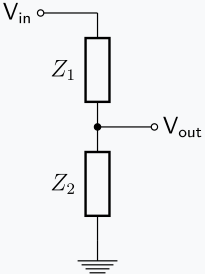
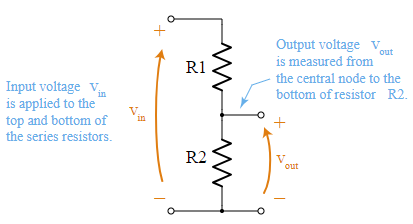
A voltage divider is a simple electronic circuit that divides an input voltage into smaller fractions. It is a fundamental circuit element used in various electronic devices and systems. The voltage divider consists of two or more resistors connected in series, with the output voltage taken from the junction between the resistors.


2.How a Voltage divider works?

The principle behind a voltage divider is based on the concept of voltage division. According to Ohm's Law, the voltage across a resistor is proportional to the current flowing through it. In a voltage divider circuit, the total current flows through the series resistors, and the voltage drop across each resistor is proportional to its resistance value.


The output voltage of the voltage divider is determined by the ratio of the resistor values. The higher the resistance value of a resistor, the larger the voltage drop across it. By carefully selecting the resistor values, it is possible to obtain a desired output voltage from an input voltage source.


3. Formula

The formula/equation for calculating the output voltage of a voltage divider is:

· Vout = Vin * (R2 / (R1 + R2))


where Vout is the output voltage, Vin is the input voltage, R1 is the resistance of the first resistor, and R2 is the resistance of the second resistor.


And there is also another version of the equation, it is similar to the one above:

Vout = (Rout/Rt) x Vin, where:

· Rout = Resistance across the output
· Rt = Total resistance of the circuit
Vout = (Resistance across the output / Total resistance of the circuit) x Vin.

Assuming that the voltage we want to know is V1, we clear this value. V1 = (Vin)(R1)/Rs. We can find V2 and V3 in the same way, using the corresponding resistor value.

Voltage divider Examples

Using the following values: R1 = 1K, R2 = 2K, R3 = 3K and Vin = 12 volts.

1. If we want to know the voltage across resistor R3.

· Vout = Vin x R3 / ( R1 + R2 + R3)

· Vout = 12V x 3K / (1K + 2K + 3K)

· Vout = 12V x 3K / 6K = 12V / 2 = 6V

2. If we want to know the voltage cross resistor R1.

· Vout = Vin x R1 / ( R1 + R2 + R3)

· Vout = 12V x 1K / (1K + 2K + 3K)

· Vout = 12V x 1K / 6K = 12V / 6 = 2V


4. What is a voltage divider circuit?
TD(638_ENKC%BZ`O2~HWM44


5.Voltage Divider Applications


Voltage dividers find wide applications in various electronic systems and devices. Some common applications of voltage dividers include:


1. Level Shifting: Voltage dividers can be used to shift the voltage level of a signal. By adjusting the resistor values, the input voltage can be scaled down or up to match the desired voltage level for a particular circuit or component.


2. Sensor Interface: Voltage dividers are often used to interface sensors with microcontrollers or analog-to-digital converters (ADCs). Sensors typically provide a voltage output proportional to the measured quantity. A voltage divider can be employed to scale down the sensor output voltage to a range compatible with the input requirements of the microcontroller or ADC.


3. Biasing Transistors: Voltage dividers are commonly used in transistor biasing circuits. They help establish a specific voltage at the base or gate terminal of the transistor, ensuring proper operating conditions.


4. Reference Voltage Generation: Voltage dividers can be employed to generate reference voltages for various purposes, such as providing a stable voltage reference for analog circuits or establishing a voltage reference for comparison in control systems.


6. What is Voltage Divider Calculator?


To simplify the calculation of voltage dividers, online calculators and software tools are available. These tools require the input voltage and the resistor values, and they provide the output voltage. By using these calculators, engineers and hobbyists can quickly determine the resistor values needed to achieve a desired output voltage.


7.What is the most effective component in a voltage divider?

The most effective component in a voltage divider is the resistor. The resistor determines the division ratio and plays a crucial role in determining the output voltage. By selecting appropriate resistor values, the desired output voltage can be achieved.


8.What is the function of a fixed resistor in the potential divider?


The function of a fixed resistor in a potential divider (another term for a voltage divider) is to determine the division ratio and control the output voltage. The fixed resistor, also known as the load resistor, remains constant and determines the lower boundary of the resistance in the voltage divider circuit. By selecting the appropriate value for the fixed resistor, the desired output voltage can be achieved based on the ratio between the fixed resistor and the variable resistor(s) in the circuit.


A voltage divider circuit is a circuit configuration that consists of two or more resistors connected in series. It is used to divide an input voltage into smaller fractions. The output voltage is taken from the junction between the resistors. A voltage divider circuit does not necessarily require a transistor. It can be implemented using resistors alone.


However, in certain applications, voltage dividers may be used in conjunction with transistors. Transistors can be employed to buffer the output voltage and provide additional functionalities such as amplification or signal conditioning. The transistor acts as an active element in the circuit, modifying the voltage division characteristics and enabling more complex circuit designs.


Frequently Asked Questions

Why is voltage divider bias called a self-biased circuit?
Voltage divider bias is called a self-biased circuit because it generates the bias voltage required for the transistor biasing within the circuit itself, using resistors. This eliminates the need for an external power supply or separate biasing circuitry. The voltage divider network sets the base bias voltage for the transistor, ensuring it operates in the active region. By adjusting the resistor values in the voltage divider, one can control the transistor’s operating point.
Can you explain how the resistor values affect the output voltage in a voltage divider?
In a voltage divider circuit, the output voltage$ ( V_{out} ) $ can be calculated using the formula: $ V_{out} = V_{in} \times \left( \frac{R_{2}}{R_{1} + R_{2}} \right) $ Where: $( V_{in} ) $ is the input voltage $( R_{1} ) and ( R_{2} ) $ are the resistor values in the voltage divider circuit The ratio of ( R_{2} ) to ( R_{1} + R_{2} ) determines how much of the input voltage is dropped across ( R_{2 ) and thus affects the output voltage. If ( R_{2} ) is much smaller than ( R_{1} ), a larger portion of the input voltage will be dropped across ( R_{2 ) and the output voltage will be closer to the input voltage. Conversely, if ( R_{2} ) is much larger compared to ( R_{1} ), only a small portion of the input voltage will be present at the output.
How can I calculate the output voltage of a voltage divider circuit?
The output voltage of a voltage divider circuit can be calculated using the following formula: Vout = Vin * (R2 / (R1 + R2)) where: Vout is the output voltage Vin is the input voltage R1 is the resistance of the first resistor in the voltage divider R2 is the resistance of the second resistor in the voltage divider For example, if you have a voltage divider circuit with Vin = 10V, R1 = 1kΩ, and R2 = 2kΩ, the output voltage would be: Vout = 10V * (2kΩ / (1kΩ + 2kΩ)) = 6.67V
What are some common applications where voltage dividers are used in conjunction with transistors?
Biasing transistors: Voltage dividers are used to provide a stable DC voltage to the base of a transistor, which is necessary for proper biasing. Creating reference voltages: Voltage dividers can be used to create a stable reference voltage for other circuits, such as comparators or analog-to-digital converters. Level shifting: Voltage dividers can be used to shift the voltage level of a signal to make it compatible with other circuits. Attenuating signals: Voltage dividers can be used to reduce the amplitude of a signal, which can be useful for protecting sensitive circuits or for matching impedance levels.
What is a voltage divider circuit? Does it need a transistor?
Yes So as you can see in the last paragraph
How do I divide voltage in high voltage applications?
In high voltage applications, voltage division can be achieved similarly to low voltage circuits but with some considerations: Use High Voltage Resistors: Ensure that the resistors used can withstand the high voltage levels without breakdown. Isolation: In high voltage environments, isolation techniques such as optocouplers or transformers may be used to divide voltages while maintaining electrical separation. Safety: Given the risks associated with high voltages, safety precautions and insulation must be carefully implemented to prevent electrical hazards.

Related Articles

Raspberry Pi and Microcontrollers Detailed Comparison

Release time:2023-12-11       Page View:626
Raspberry Pi and microcontrollers: Two giants of the computing worldBehind the rise of the digital world, Raspberry Pi and microcontrollers are like two giants, each dominating its own field. They are not only very different in terms of functionality, but also in terms of applications and price. Below, we will explore the differences between these tw...

A classification to converters

Release time:2023-12-04       Page View:587
A classification to convertersConverters, in the context of power electronics, are devices that convert electrical energy from one form to another. They can be classified based on various criteria. Here are some common classifications of converters:1. Based on the Direction of Energy Flow:a. AC to DC Converters (Rectifiers): These converters c...

RTX4070 VS RTX4080 VS RTX4090 GPUs Comparison

Release time:2023-12-02       Page View:725
Introduction:The world of graphics cards is about to witness an epic clash as NVIDIA unveils its highly anticipated lineup of next-generation GPUs. The RTX 4070, RTX 4080, and RTX 4090 are set to redefine gaming and unleash unprecedented levels of visual performance. With each iteration promising technological advancements, gamers and e...

Introducing the LOONGSON LS3A6000 CPU

Release time:2023-12-02       Page View:428
On November 28, 2023, a significant milestone was achieved in China's technology sector with the release of the LOONGSON LS3A6000 CPU in Beijing. This new generation of home-made CPU represents a major leap forward in China's pursuit of independently designed and developed processors, free from any reliance on foreign authorize...

Flip-Flop Electronics, How Flip Flops Work, Types, Application,

Release time:2023-11-22       Page View:551
Flip-Flop Electronics: How Flip Flops Work, Types, Applications, and a Comparison with Latches1.What are Flip-Flops1.1History2.How Flip Flops Work3.Types of Flip-Flops3.1 S-R Flip Flop3.2 J-K Flip Flop3.3 D Flip Flop3.4 T Flip Flop4.Applications of Flip-Flops5.Flip-Flop v/s LatchIntroduction:In the realm of digital...

Basis of Alkaline Batteries, Lithium vs Alkaline Batteries vs Nickel

Release time:2023-11-21       Page View:689
Hello friends, this post is about Basics of Alkaline Batteries: Lithium vs. Alkaline Batteries vs. NickelCatalogWhat are Alkaline Batteries?Basic structure of an alkaline batteryAlkaline battery sizesTypes of Alkaline BatteriesHow an alkaline based battery is made?Lithium vs Alkaline Batteriesvs NickelHow NickelBatteries Work?How ...

Electrical Connector Recognition:Types,Construction,Connecting Method

Release time:2023-11-21       Page View:200

Coaxial Cable: A Versatile Solution for Signal Transmission

Release time:2023-11-20       Page View:180

The Future of AI: Elon Musk's Concerns and the Birth of xAI Grok

Release time:2023-11-08       Page View:407
Elon Musk has introduced Grok, an AI chatbot that possesses a rebellious nature, inspired by The Hitchhiker’s Guide to the Galaxy. The CEO of Tesla, who recently expressed concerns about the potential dangers of AI, stated that Grok would be accessible to premium subscribers on his X platform once testing is complete. Musk also disclosed ...

What's the Difference Between Amplifier and Operational Amplifier

Release time:2023-11-07       Page View:620
What is an amplifier ?An amplifier is a general term used to describe a device or circuit that increases the amplitude or power of a signal. It is used to boost the strength of a weak signal, allowing it to be transmitted or processed effectively.What is an Operationalamplifier ?On the other hand, an operational amplifier (op-amp) is a specific type of...

How to Fix an iPhone Flashlight That Isn’t Working

Release time:2023-11-03       Page View:620
This post will tell you how to Fix an iPhone Flashlight That Isn’t Working

Understanding Surges and Surge Protectors: Protecting Your Electronics

Release time:2023-11-01       Page View:469
This article provides an in-depth understanding of surges, surge protectors, their working principles, applications, types, maintenance, and when to use them. Surge protectors utilize metal oxide varistors or gas discharge tubes to redirect excess voltage to the ground. They are essential for protecting a wide range of electronic devices and are commonly ...
RFQ