Cat5e vs. Cat6 RJ45 Cable: Ethernet Cables Comparison
Catalog
Cat5e vs Cat6: RJ45 Cable Overview
What Is Cat5e Cable?
What Is Cat6 Cable?
Cat5e vs Cat6 RJ45 Cable: What’s the Difference?
Conclusion
To meet the ever-increasing need of higher performance data centers, Ethernet cable development has never ceased. The two most popular Ethernet cables on the market right now are Cat5e and Cat6 RJ45 cables. As revealed by their names, the numbers and letters "5e" and "6" distinguish them from one another. What exactly do these words mean? What is the difference between Cat5e and Cat6 RJ45 cables? This article is dedicated to answering this question.
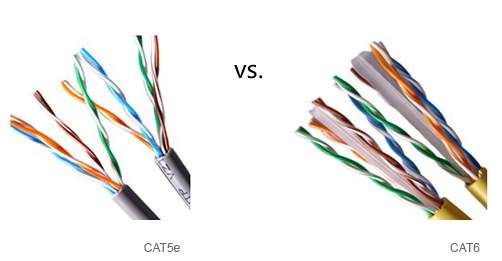
Figure 1: Cabling of Cat5e vs Cat6 RJ45 cable.
Cat5e vs Cat6: RJ45 Cable Overview
Cat5e and Cat6 are two different Ethernet cables classified by standard categories. The “Cat” refers to “Category of cable”, and the terms “5e” and “6” refer to different standard of category.
What Is Cat5e Cable?
Cat5e cable (Category 5e cable) is an enhanced version of Cat5. While inheriting the construction and 100MHz bandwidth of its predecessor, Cat5e improves performance by introducing optimized specifications in data rate and crosstalk defense. It transfers data at 10 times the speed of Cat5 cable, up to 1000Mbps. It supports Gigabit Ethernet and frequently used in home networking environment with various lengths and premise wiring.
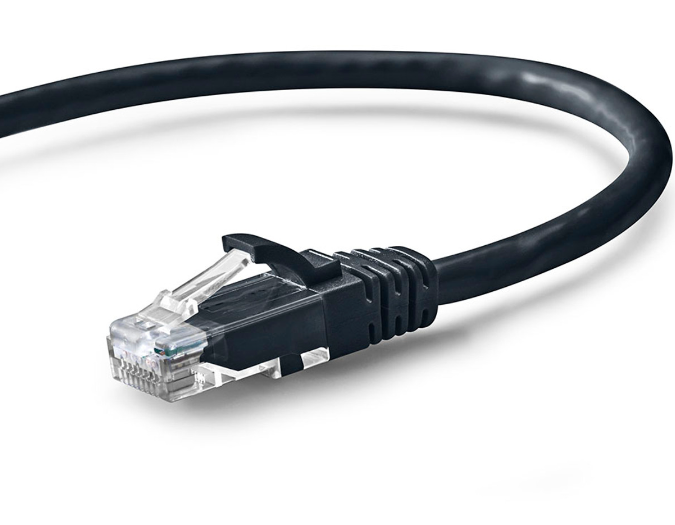
Figure 2: This photo shows a Cat5e UTP Ethernet patch cable.
What Is Cat6 Cable?
Cat6 cable (Category 6 cable) is a standard twisted-pair cable for Ethernet and other network layers. It has a 250MHz bandwidth and can rate up to 10Gbps in a limited distance of 55 meters. It can also reach to 100 meters (328 feet) at a slow rate of 1000Mbps. For its high speed, Cat6 cable is widely used to handle 10GbE. Moreover, Cat6 has excellent capability to reduce crosstalk due to improved shielding and twisted-pair cable design.
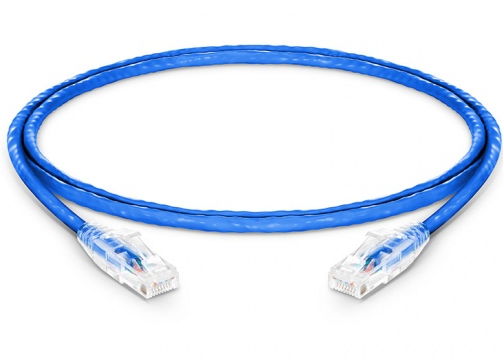
Figure 3: This photo shows a Cat6 UTP Ethernet patch cable.
Cat5e vs Cat6 RJ45 Cable: What’s the Difference?
Category | Cat5e | Cat6 |
Interface | RJ45 | RJ45 |
4 twisted-pair Wires | Yes | Yes |
Bandwidth | 100MHz | 250MHz |
Maximum Length | 100 m | 100m in slow network (≦1000Mbps); |
Data Rate | 1Gbps | 10Gbps over short distance (33-55m); |
Crosstalk | Far Less than Cat5; More than Cat6 | Less crosstalk; high SNR |
Cost | cheaper | 20% higher |
As the table shown, although Cat5e and Cat6 RJ45 cable share commons in RJ45 connector and construction feature of twisted-pair copper wires, they are totally different standards of Ethernet cable. Cat5e RJ45 cable has lower level of transmission performance, while Cat6 RJ45 cable is optimized with a 250MHz bandwidth, higher data rate and stronger resistance to crosstalk and noise. The following passage will focus on the illustration of their functional differences.
Crosstalk
Both Cat5e and Cat6 are comprising of 4 twisted-pair copper wires with a longitudinal separator to isolate them. This design can reduce electromagnetic interface among different wires. Compared with Cat5e, while providing equal level far end crosstalk (FEXT), return loss and insertion loss, Cat6 features lower near end crosstalk (NEXT). Simply put, Cat6 cable have high SNR (Signal Noise Ratio), which provide less noise, fewer errors and higher data rate in signal transmission.
Date rate
Cat5e cable is limited at a 100MHz bandwidth, while Cat6 cable has a high bandwidth of 250MHz, which leads to different data rate. Cat5e can reach up to 1Gbps at a distance of 100 meters. The data rate of Cat6 varies based on its maximum length. Over long distance transmission within 100 meters, maximum data rate of Cat6 is 1000Mbps. In short length limited in 55 meters, it can support 10 Gigabit Ethernet. It is noted that in high crosstalk condition a transfer distance only within 33 meters is available.
In addition to the differences mentioned in the catalog between Cat5e and Cat6 RJ45 cables, there are a few other aspects you may consider when choosing between them:
Bandwidth: Cat6 cables generally offer higher bandwidth compared to Cat5e cables. This means that Cat6 cables can support faster data transmission rates and are better suited for applications that require high-speed data transfer, such as streaming video or large file transfers.
Cable Length: The maximum recommended length for Cat5e cables is 100 meters, while Cat6 cables can support lengths up to 55 meters for 10GBASE-T (10 Gigabit Ethernet) connections. If you need to cover longer distances, Cat6 cables may be more suitable.
Future-proofing: Cat6 cables are designed to meet more stringent specifications and provide better performance compared to Cat5e cables. If you anticipate future network upgrades or higher bandwidth requirements, investing in Cat6 cables may be a more future-proof choice.
Cost: Cat6 cables are generally more expensive than Cat5e cables due to their higher performance capabilities. Consider your budget and the specific requirements of your network to determine the most cost-effective option for your needs.
Installation: Cat6 cables are slightly thicker and less flexible than Cat5e cables. This may affect the ease of installation, especially in tight spaces or when routing cables through walls or ceilings. Consider the installation environment and any potential constraints you may encounter.
Remember to assess your specific networking needs and consult with professionals or experts if you are unsure which cable type is best suited for your application.
Conclusion
This article made a comparison and contrast between Cat5e vs Cat6 RJ45 cable. While finding some similarities, it focus on their functional difference: crosstalk resistance ability and data rate. Cat6, as a descendant of Cat5, it owns higher standard of SNR and data rate, which gives it an edge in higher performance conditions required 10 Gigabit Ethernet.
Read Articles:
RJ45 Connector: Color Code, Applications, and Usage Guidelines


Frequently Asked Questions
Related Articles

ULN2803ADWR: Datasheet, Pinout, Overview
A Basis of LAN9512I-JZX Integrated Circuit
TIP36C Vs TIP41C Transistor: Datasheet, Pinout, and Test Circuits
MCIMX6Y2CVM08AB Microprocessor: Features, Datasheet
TMS320F28335PGFA Datasheet, Pinout, Application
WS2812 LED Strip: Digital Addressable RGB Pixel
2N3904 BJT: Pinout, Datasheet, Alternative
LM317 Voltage Regulator: Features, Price, Application
APA102, WS2801, WS2811, WS2812, WS2813, and WS2815 LED Strip Lights Comparison
TL494 Pulse-Width-Modulation Control Circuits: Datasheet
Types of Resistors and Selection Principles