MCIMX6Y2CVM08AB Microprocessor: Features, Datasheet

Catalog
Introduction
What is a Microprocessor?
MCIMX6Y2CVM08AB Definition
MCIMX6Y2CVM08AA vs MCIMX6Y2CVM08AB: Overview
MCIMX6Y2CVM08AA vs MCIMX6Y2CVM08AB: Pinout
MCIMX6Y2CVM08AA vs MCIMX6Y2CVM08AB: CAD-Model
MCIMX6Y2CVM08AA vs MCIMX6Y2CVM08AB:Applications
MCIMX6Y2CVM08AA vs MCIMX6Y2CVM08AB: Features
MCIMX6Y2CVM08AA vs MCIMX6Y2CVM08AB: Diagram
MCIMX6Y2CVM08AA vs MCIMX6Y2CVM08AB: Datasheet
Conclusion
Introduction:
Microprocessors play a crucial role in the modern world of technology, powering a wide range of electronic devices. In this article, we will delve into the features and differences between two microprocessors: MCIMX6Y2CVM08AA and MCIMX6Y2CVM08AB. We will explore their pinout, applications, features, diagrams, and provide access to their datasheets.
What is a Microprocessor?
A microprocessor is an integrated circuit that functions as the central processing unit (CPU) of a computer or electronic device. It executes instructions, performs calculations, and manages data flow within the system.
MCIMX6Y2CVM08AB Definition
MCIMX6Y2CVM08AA vs MCIMX6Y2CVM08AB: Overview

information
Overview of MCIMX6Y2CVM08AA:
MCIMX6Y2CVM08AA is a microprocessor designed for various applications, including industrial automation, automotive systems, and consumer electronics. It offers high-performance computing capabilities, advanced multimedia processing, and efficient power management. This microprocessor is known for its reliability and versatility.
Overview of MCIMX6Y2CVM08AB:
MCIMX6Y2CVM08AB is another microprocessor from the same series, sharing similarities with MCIMX6Y2CVM08AA. It is specifically tailored for applications requiring enhanced security features, making it suitable for industries such as finance, healthcare, and defense.
MCIMX6Y2CVM08AA vs MCIMX6Y2CVM08AB: Pinout:
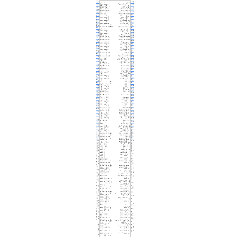
MCIMX6Y2CVM08AA Pinout
MCIMX6Y2CVM08AB Pinout
MCIMX6Y2CVM08AA vs MCIMX6Y2CVM08AB: CAD-Model
MCIMX6Y2CVM08AA
Symbol
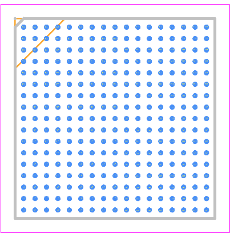
Footprint
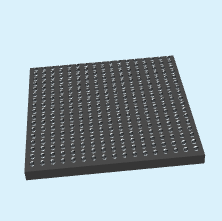
3D-Model
MCIMX6Y2CVM08AB
Symbol
Footprint
3D-Model
MCIMX6Y2CVM08AA vs MCIMX6Y2CVM08AB: Applications:
MCIMX6Y2CVM08AA is widely used in industrial automation, automotive infotainment systems, and consumer electronics like smart TVs and home appliances. On the other hand, MCIMX6Y2CVM08AB, with its enhanced security features, is preferred in applications where data protection and confidentiality are paramount, such as financial systems, medical devices, and military equipment.
The i.MX 6ULL processors are specifically useful for applications such as:
Telematics
Audio playback
Connected devices
IoT Gateway
Access control panels
Human Machine Interfaces (HMI)
Portable medical and health care
IP phones
Smart appliances
eReaders
MCIMX6Y2CVM08AA vs MCIMX6Y2CVM08AB: Features:
Both microprocessors share many common features, such as high-performance computing capabilities, multimedia processing, and power management. However, MCIMX6Y2CVM08AB offers additional security features, including encryption, secure boot, and tamper detection, ensuring the integrity and confidentiality of sensitive data.
Supports single Arm Cortex-A7 MPCore (with TrustZone) with:
— 32 KB L1 Instruction Cache
— 32 KB L1 Data Cache
— Private Timer and Watchdog
— Cortex-A7 NEON Media Processing Engine (MPE) Co-processor
• General Interrupt Controller (GIC) with 128 interrupts support
• Global Timer
• Snoop Control Unit (SCU)
• 128 KB unified I/D L2 cache
• Single Master AXI bus interface output of L2 cache
• Frequency of the core (including Neon and L1 cache), as per Table 10, "Operating Ranges," on
page 24.
• NEON MPE coprocessor
— SIMD Media Processing Architecture
— NEON register file with 32x64-bit general-purpose registers
— NEON Integer execute pipeline (ALU, Shift, MAC)
— NEON dual, single-precision floating point execute pipeline (FADD, FMUL)
— NEON load/store and permute pipeline
— 32 double-precision VFPv3 floating point registers
The SoC-level memory system consists of the following additional components:
— Boot ROM, including HAB (96 KB)
— Internal multimedia/shared, fast access RAM (OCRAM, 128 KB)
• External memory interfaces: The i.MX 6ULL processors support latest, high volume, cost effective
handheld DRAM, NOR, and NAND Flash memory standards.
— 16-bit LP-DDR2-800, 16-bit DDR3-800 and DDR3L-800
— 8-bit NAND-Flash, including support for Raw MLC/SLC, 2 KB, 4 KB, and 8 KB page size,
BA-NAND, PBA-NAND, LBA-NAND, OneNAND™ and others. BCH ECC up to 40 bits.
— 16/8-bit NOR Flash. All EIMv2 pins are muxed on other interfaces.
Each i.MX 6ULL processor enables the following interfaces to external devices (some of them are muxed
and not available simultaneously):
• Displays:
— One parallel display port, support max 85 MHz display clock and up to WXGA (1366 x 768)
at 60 Hz
— Support 24-bit, 18-bit, 16-bit, and 8-bit parallel display
— Electrophoretic display controller support direct-driver for E-Ink EPD panel, with up to
2048x1536 resolution at 106 Hz
• Camera sensors:
— One parallel camera port, up to 24 bit and 133.3 MHz pixel clock
— Support 24-bit, 16-bit, 10-bit, and 8-bit input
— Support BT.656 interface
• Expansion cards:
— Two MMC/SD/SDIO card ports all supporting:
– 1-bit or 4-bit transfer mode specifications for SD and SDIO cards up to UHS-I SDR-104
mode (104 MB/s max)
– 1-bit, 4-bit, or 8-bit transfer mode specifications for MMC cards up to 52 MHz in both SDR
and DDR modes (104 MB/s max)
– 4-bit or 8-bit transfer mode specifications for eMMC chips up to 200 MHz in HS200 mode
(200 MB/s max)
i.MX 6ULL Applications Processors for Industrial Products, Rev. 1.2, 11/2017
8 NXP Semiconductors
i.MX 6ULL Introduction
• USB :
— Two high speed (HS) USB 2.0 OTG (Up to 480 Mbps), with integrated HS USB PHY
• Miscellaneous IPs and interfaces:
— Three I2S/SAI/AC97, up to 1.4 Mbps each
— ESAI
— Sony Philips Digital Interface Format (SPDIF), Rx and Tx
— Eight UARTs, up to 5.0 Mbps each:
– Providing RS232 interface
– Supporting 9-bit RS485 multidrop mode
– Support RTS/CTS for hardware flow control
— Four eCSPI (Enhanced CSPI), up to 52 Mbps each
— Four I 2C, supports 400 kbps
— Two 10/100 Ethernet Controller (IEEE1588 compliant)
— Eight Pulse Width Modulators (PWM)
— System JTAG Controller (SJC)
— GPIO with interrupt capabilities
— 8x8 Key Pad Port (KPP)
— One Quad SPI to connect to serial NOR flash
— Two Flexible Controller Area Network (FlexCAN)
— Three Watchdog timers (WDOG)
— 8-bit/10-bit/12-bit/16-bit camera interface
— Two 12-bit Analog to Digital Converters (ADC) with up to 10 input channels in total
The i.MX 6ULL processors integrate advanced power management unit and controllers:
• Provide PMU, including LDO supplies, for on-chip resources
• Use Temperature Sensor for monitoring the die temperature
• Use Voltage Sensor for monitoring the die voltage
• Support DVFS techniques for low power modes
• Use SW State Retention and Power Gating for Arm and NEON
• Support various levels of system power modes
• Use flexible clock gating control scheme
The i.MX 6ULL processors use dedicated hardware accelerators to meet the targeted multimedia
performance. The use of hardware accelerators is a key factor in obtaining high performance at low power
consumption numbers, while having the CPU core relatively free for performing other tasks.
The i.MX 6ULL processors incorporate the following hardware accelerators:
• PXP—Pixel Processing Pipeline for image resize, rotation, overlay and CSC. Off loading key pixel
processing operations are required to support the LCD display applications.
• ASRC—Asynchronous Sample Rate Converter
i.MX 6ULL Introduction
i.MX 6ULL Applications Processors for Industrial Products, Rev. 1.2, 11/2017
NXP Semiconductors 9
Security functions are enabled and accelerated by the following hardware:
• Arm TrustZone including the TZ architecture (separation of interrupts, memory mapping, etc.)
• SJC—System JTAG Controller. Protecting JTAG from debug port attacks by regulating or
blocking the access to the system debug features.
• SNVS—Secure Non-Volatile Storage, including Secure Real Time Clock, both active tamper and
passive tamper detection logic has up to 10 tamper inputs. Voltage monitor, temperature monitor,
and clock frequency monitor protects the secure key storage.
• CSU—Central Security Unit. Enhancement for the IC Identification Module (IIM). Will be
configured during boot and by eFUSEs and will determine the security level operation mode as
well as the TZ policy.
• A-HAB—Advanced High Assurance Boot—HABv4 with the new embedded enhancements:
AES-128 encryption, SHA-1, and SHA-256 HW acceleration engine, 2048-bit RSA key, version
control mechanism, warm boot, CSU, and TZ initialization.
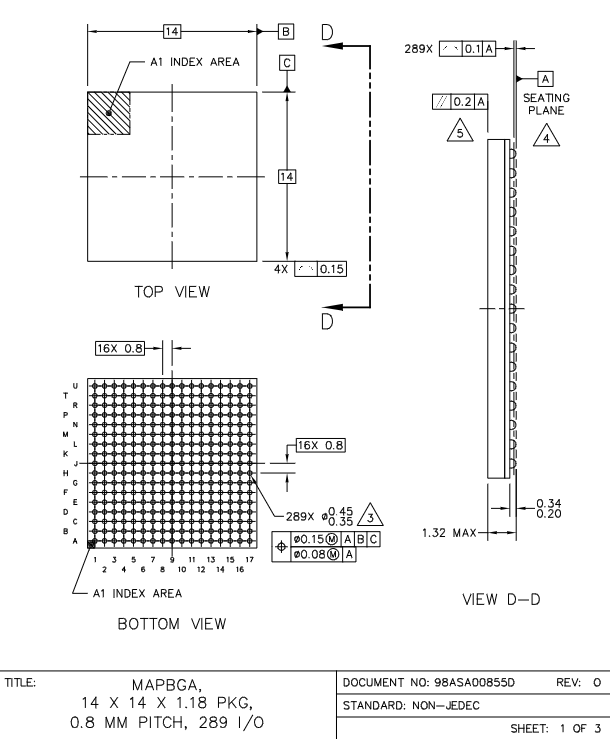
MCIMX6Y2CVM08AA vs MCIMX6Y2CVM08AB: Diagram:
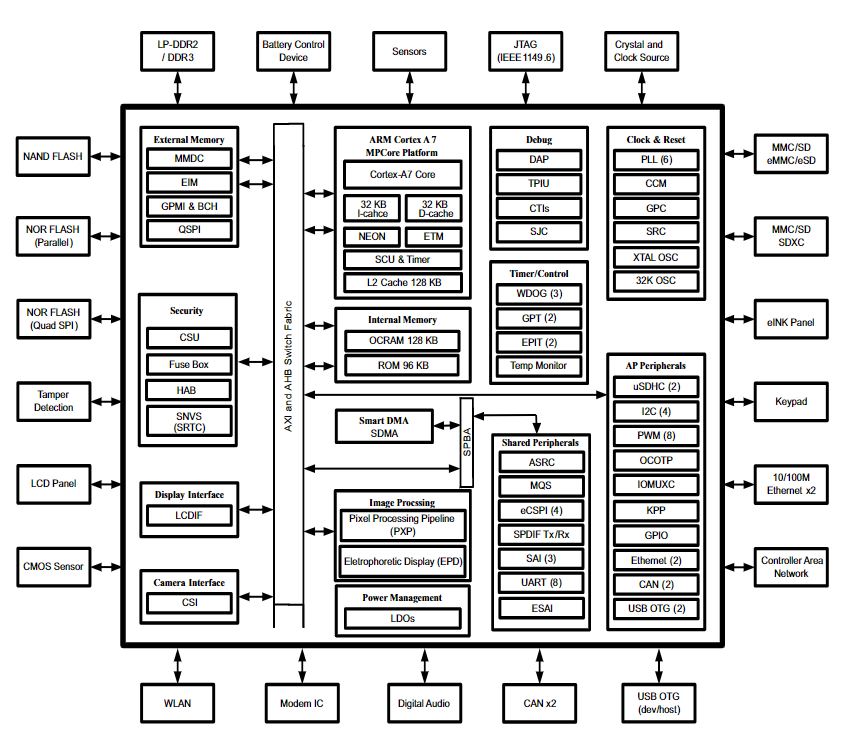
14 x 14 mm BGA, Case X Package 1 Top, Bottom, and Slde Vlews
Power Modes
The i.MX 6ULL has the following power modes:
RUN Mode: CPU is active, some portion of the chip can be clock gated or power gated. Support
multiple voltage frequency scaling set point for power saving
Low Power Mode: CPU in WFI state or power gate, some portion of the chip can be shut off for
power saving. The Suspend, Low Power Idle. System Idle are consider as sub modes of the RUN
mode;
SNVS Mode: only RTC and tamper detection logic is active, with 12 GPIOs in low power state
retention mode;
OFF Mode: all power rails are off.
MCIMX6Y2CVM08AA vs MCIMX6Y2CVM08AB: Datasheet:
MCIMX6Y2CVM08AA PDF
MCIMX6Y2CVM08AB PDF
Conclusion:
In this article, we explored the MCIMX6Y2CVM08AA and MCIMX6Y2CVM08AB microprocessors, highlighting their differences in pinout, applications, features, diagrams, and providing access to their datasheets. Both microprocessors offer high-performance computing capabilities, but MCIMX6Y2CVM08AB stands out with its enhanced security features. Engineers and developers can choose the microprocessor that best suits their specific requirements, ensuring optimal performance and security in their applications.


Related Articles

2N5551 vs BC547 BJTs Comparison
LM3914 vs LM3915 vs LM3916 vs LM3917 How They Work?
Top 12 electronic component distributors 2024
TPS5450DDAR Datasheet, Pinout, Specification
C945 Transistor Datasheet:C1815 VS C945 Comparison
Lithium Battery Charger TP4056: Datasheet, Schematic, Price
TDA7265 Audio Amplifier:How To Connect And Test?
1n4007 vs 1n5399 Rectifier Diode: Pinout, Datasheet, Specifications
SN74HC595N vs SN74HC574N Shift Register Datasheet,Specs
H6 vs H7 vs H8 vs H9 Battery Difference and Choosing Guide
ADRV9009BBCZ RF Description, Datasheet, Specification