NRF52840, NRF5340, and NRF52833 Microcontrollers,Which is Best?
Introduction:
Microcontrollers play a crucial role in the development of various embedded systems and Internet of Things (IoT) applications. Nordic Semiconductor, a leading provider of low-power wireless solutions, offers a range of microcontrollers suitable for diverse use cases. In this article, we will compare three popular microcontrollers from Nordic Semiconductor: NRF52840, NRF5340, and NRF52833. By understanding their features and capabilities, developers can make informed decisions when selecting the right microcontroller for their projects.
1. NRF52840:
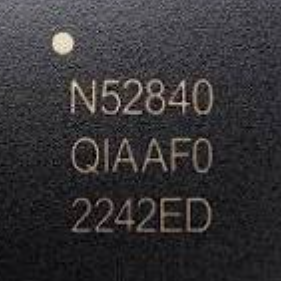
The NRF52840 is a 32-bit Arm Cortex-M4F based microcontroller that combines high-performance processing with low-power operation. Key features of the NRF52840 include:
- Processing Power: The NRF52840 operates at a maximum CPU frequency of 64 MHz, offering substantial processing capabilities for a wide range of applications.
- Wireless Connectivity: It supports various wireless protocols, including Bluetooth 5, Bluetooth Mesh, Thread, and Zigbee. This makes the NRF52840 suitable for applications requiring wireless communication, such as smart home devices and wearables.
- Memory: The NRF52840 provides 1 MB of flash memory and 256 KB of RAM, allowing for ample storage and data handling capacity.
- Peripherals: It offers a rich set of peripherals, including UART, SPI, I2C, USB, and PWM interfaces, enabling seamless integration with sensors, actuators, and other external devices.
2. NRF5340:
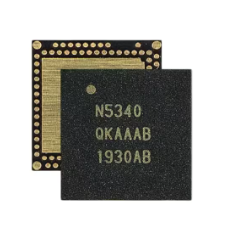
The NRF5340 is a dual-core microcontroller, featuring both the Arm Cortex-M33 and Cortex-M33 with the Arm TrustZone technology. This combination offers enhanced security and performance. Key features of the NRF5340 include:
- Dual-Core Architecture: The NRF5340's dual-core setup allows for simultaneous execution of multiple tasks, making it ideal for complex applications requiring real-time processing and secure operations.
- Processing Power: Each Cortex-M33 core operates at a maximum frequency of 128 MHz, providing substantial computing power for demanding applications.
- Wireless Connectivity: It supports Bluetooth 5.2, Bluetooth Mesh, Thread, and Zigbee, enabling seamless wireless communication and interoperability.
- Memory: The NRF5340 provides 1 MB of flash memory and 512 KB of RAM, allowing for extensive code storage and data handling capacity.
- Security: With the Arm TrustZone technology, the NRF5340 offers enhanced security features, including secure boot, secure firmware update, and isolated execution environments.
3. NRF52833:
The NRF52833 is a versatile microcontroller that combines low-power operation with a rich set of features. Key features of the NRF52833 include:
- Processing Power: The NRF52833 operates at a maximum CPU frequency of 64 MHz, providing sufficient processing power for various applications.
- Wireless Connectivity: It supports Bluetooth 5.2 and Bluetooth Mesh, making it suitable for applications that require wireless communication.
- Memory: The NRF52833 provides 512 KB of flash memory and 128 KB of RAM, offering adequate storage and data handling capabilities.
- Peripherals: It offers a range of peripherals, including UART, SPI, I2C, NFC, and PWM interfaces, enabling seamless integration with external devices.
- Low Power: The NRF52833 is optimized for low-power operation, making it ideal for battery-powered IoT devices that require extended battery life.
Conclusion:
The NRF52840, NRF5340, and NRF52833 microcontrollers from Nordic Semiconductor offer a wide range of features and capabilities to cater to different application requirements. The NRF52840 provides a balance between performance and power consumption, making it suitable for various IoT applications. The NRF5340, with its dual-core architecture and advanced security features, is ideal for applications that demand high performance and stringent security measures. Lastly, the NRF52833 offers a cost-effective solution with low-power operation, making it suitable for battery-powered IoT devices.
When selecting a microcontroller for a specific project, it is crucial to evaluate the application requirements, power constraints, wireless connectivity needs, processing power, memory capacity, and security features. By understanding the distinctions between the NRF52840, NRF5340, and NRF52833, developers can make informed decisions to ensure optimal performance and functionality in their designs.
nrf52840 vscode
nrf52840 vs nrf52832
nrf52840 vs nrf52833
nrf52840 vs stm32wb
nrf52840 vs nrf51822
nrf52840 vs 52832
nrf52840 Vs rp2040
nrf52840 Vs esp32


Related Articles

2N5551 vs BC547 BJTs Comparison
LM3914 vs LM3915 vs LM3916 vs LM3917 How They Work?
Top 12 electronic component distributors 2024
TPS5450DDAR Datasheet, Pinout, Specification
C945 Transistor Datasheet:C1815 VS C945 Comparison
Lithium Battery Charger TP4056: Datasheet, Schematic, Price
TDA7265 Audio Amplifier:How To Connect And Test?
1n4007 vs 1n5399 Rectifier Diode: Pinout, Datasheet, Specifications
SN74HC595N vs SN74HC574N Shift Register Datasheet,Specs
H6 vs H7 vs H8 vs H9 Battery Difference and Choosing Guide
ADRV9009BBCZ RF Description, Datasheet, Specification