SN74HC595N vs SN74HC574N Shift Register Datasheet,Specs
yunying Release time:2024-03-20 Page View:748
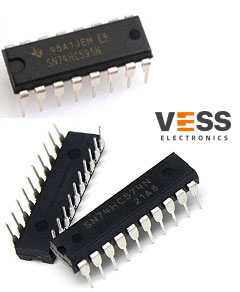
Dear friends,this post will help you make a better choice between SN74HC595N vs SN74HC574N for you, and reveal Shift Register Datasheet,Specs
SN74HC595N:Shift Register 2/6V -40°C~85°C Shift Register 74HC Series 74HC595 16 Pin 5V 16-DIP (0.300, 7.62mm)
SN74HC574N:2V~6V 36MHz 8 Bit D-Type Flip Flop DUAL 74HC574 20 Pins 74HC Series 20-DIP (0.300, 7.62mm)
- What is SN74HC595N?
- What is SN74HC574N?
- SN74HC595N vs SN74HC574N Features
- SN74HC595N vs SN74HC574N Application
- SN74HC595N vs SN74HC574N Pinout
- SN74HC595N vs SN74HC574N CAD-Model
- SN74HC595N vs SN74HC574N Packaging information
- SN74HC595N vs SN74HC574N Block Diagram
- SN74HC595N vs SN74HC574N Which is better?
- Related article
- Specifications
- Datasheets
- Product comparison
What is SN74HC595N?
SN74HC595N Description
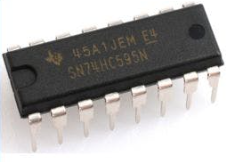
The SN74HCT595 shift register contains an 8-bit, serial-in, parallel-out shift register that feeds an 8-bit D-type storage register. The storage register has parallel 3-state outputs. Separate clocks are provided for both the shift and storage register. The shift register has a direct overriding clear (SRCLR) input, serial (SER) input, and a serial output (QH') for cascading.
When the output-enable (OE) input is high, the storage register outputs are in a high-impedance state. Internal register data and serial output (QH') are not impacted by the operation of the OE input.
What is SN74HC574N?
SN74HC574N Description

SN74HC574N octal edge-triggered D-type flip-flops feature 3-state outputs designed specifically for bus driving.
They are particularly suitable for implementing buffer registers, I/O ports, bidirectional bus drivers, and working registers.
SN74HC595N vs SN74HC574N Features
SN74HC595N Features
• LSTTL input logic compatible
– VIL(max) = 0.8 V, VIH(min) = 2 V
• CMOS input logic compatible
– II≤1 µA at VOL, VOH
• 4.5 V to 5.5 V operation
• Supports fanout up to 10 LSTTL loads
• Shift register has direct clear
• Extended ambient temperature range: –40°C to +125°C, TA
SN74HC574N Features
• Wide Operating Voltage Range of 2 V to 6 V
• High-Current 3-State Noninverting Outputs Drive
Bus Lines Directly or Up to 15 LSTTL Loads
• Low Power Consumption, 80-µA Max ICC
• Typical tpd = 22 ns
• ±6-mA Output Drive at 5 V
• Low Input Current of 1-µA Max
• Bus-Structured Pinout
• On Products Compliant to MIL-PRF-38535,
All Parameters Are Tested Unless Otherwise
Noted. On All Other Products, Production Processing Does Not Necessarily Include Testing
of All Parameters.
SN74HC595N vs SN74HC574N Application
SN74HC595N Applications
• Output expansion
• LED matrix control
• 7-segment display control
• 8-bit data storage
SN74HC574N Applications
SN74HC595N vs SN74HC574N Pinout
SN74HC595N vs SN74HC574N Pinout
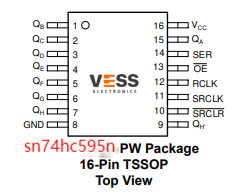
SN74HC595N Pinout
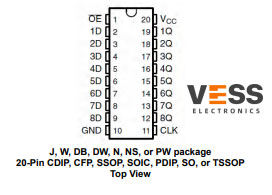
SN74HC574N Pinout
SN74HC595N vs SN74HC574N CAD-Model
SN74HC595N vs SN74HC574N CAD-Model
SN74HC595N
Symbol
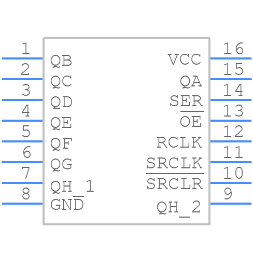
Footprint
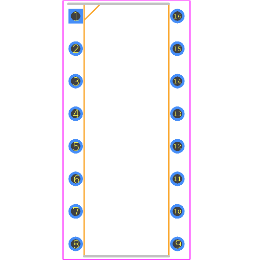
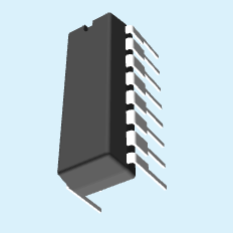
3D-model
SN74HC574N
Symbol

Footprint
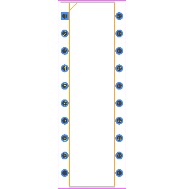
3D-model
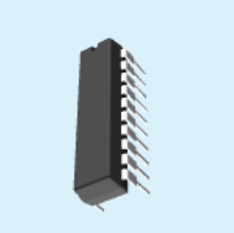
SN74HC595N vs SN74HC574N Packaging information
SN74HC595N

SN74HC574N
SN74HC595N vs SN74HC574N Block Diagram
SN74HC595N vs SN74HC574N Block Diagram

SN74HC595N Block Diagram

SN74HC574N Block Diagram
SN74HC595N vs SN74HC574N Which is better?
SN74HCT595 datasheet, SN74HC574N datasheet pdf, SN74HC74N datasheet vs SN74HC00D datasheet can be found in product comparison. (swipe to the end of the article and click to see datasheet)
The choice between SN74HC595N and SN74HC574N depends on the specific requirements of your application. Both are 8-bit shift registers, but they have different functionalities and use cases.
SN74HC595N:
- It is a serial-in, parallel-out shift register.
- It is commonly used for driving multiple LEDs, controlling shift register displays, or interfacing with parallel devices from a serial data source.
- The data is shifted in serially and stored in the internal 8-bit register, then the stored data can be transferred in parallel to the output pins.
- It is often used in applications where you need to control multiple outputs from a microcontroller with limited I/O pins.
SN74HC574N:
- It is a parallel-in, parallel-out shift register.
- It is commonly used for capturing or latching parallel data from external devices, or for holding data temporarily.
- The data is loaded in parallel into the internal 8-bit register and can be read out in parallel at the output pins.
- It is often used in applications where you need to interface with parallel data sources or temporarily store parallel data.
In general:
- If you need to control multiple outputs (e.g., LEDs, shift register displays) from a serial data source like a microcontroller, the SN74HC595N is a better choice.
- If you need to capture or latch parallel data from external devices or temporarily store parallel data, the SN74HC574N is a better choice.
Ultimately, the choice between SN74HC595N and SN74HC574N depends on whether you need serial-to-parallel conversion (SN74HC595N) or parallel-to-parallel storage/latching (SN74HC574N).
Related article
Specifications
- Manufacturer :
- Texas Instruments
- Product Category :
- Shift Registers
- Function :
- Serial to Parallel, Serial
- Logic Type :
- Shift Register
- Mounting Type :
- Through Hole
- Number of Bits per Element :
- 8
- Number of Elements :
- 1
- Operating Temperature :
- -40°C ~ 85°C
- Output Type :
- Tri-State
- Product Status :
- Active
- Supplier Device Package :
- 16-PDIP
- Voltage - Supply :
- 2V ~ 6V
Datasheets
- Datasheets
- SN74HC595N
Product comparison
-
ImagePart NumberManufacturerToleranceVoltage - RatedProduct StatusPackage / CaseProduct CategoryView Compare
-
-
-
Active
-
Flip Flops
-
-
-
Active
-
Flip Flops
-
-
-
Active
-
Gates and Inverters
-
-
-
Active
-
Shift Registers
- Share this post
-


Frequently Asked Questions
sn74hc595n vs 74hc595?
The SN74HC595N and 74HC595 are essentially the same chip, with the “SN” prefix indicating that it is manufactured by Texas Instruments. The 74HC595 is a popular 8-bit shift register with an 8-bit storage register and 3-state outputs. The SN74HC595N is a specific variant of the 74HC595 made by Texas Instruments.
How to use sn74hc595n?
The SN74HC595N is commonly used in microcontroller projects to expand the number of output pins available. It can be used to control multiple LEDs, drive a 7-segment display, or any application that requires controlling multiple outputs using minimal microcontroller pins. To use it, you would typically connect it to a microcontroller, clock in the data you want to output, and then toggle a latch pin to update the outputs.
How fast can sn74hc595n be driven
The speed at which you can drive the SN74HC595N depends on various factors such as the clock frequency, the setup time for data, and the capacitance of the connected circuitry. Typically, the SN74HC595N can operate at clock frequencies up to several megahertz in most applications.
What does the texas instruments ic chip sn74hc595n do?
The SN74HC595N is an 8-bit shift register with an 8-bit storage register and 3-state outputs. It allows you to serially shift in data and then latch that data to the output pins. This makes it useful for expanding the number of output pins on a microcontroller.
Is a sn74hc595na h bridge?
No, the SN74HC595N is not an H-bridge. It is a shift register IC used for serial to parallel data conversion.
What to make with a sn74hc595n?
The SN74HC595N can be used in various projects such as LED cube displays, controlling multiple LEDs, driving a 7-segment display, creating custom characters on an LCD, or any project where you need to control multiple outputs efficiently with minimal microcontroller pins.
Related Articles

2N5551 vs BC547 BJTs Comparison
LM3914 vs LM3915 vs LM3916 vs LM3917 How They Work?
Top 12 electronic component distributors 2024
TPS5450DDAR Datasheet, Pinout, Specification
C945 Transistor Datasheet:C1815 VS C945 Comparison
Lithium Battery Charger TP4056: Datasheet, Schematic, Price
TDA7265 Audio Amplifier:How To Connect And Test?
1n4007 vs 1n5399 Rectifier Diode: Pinout, Datasheet, Specifications
SN74HC595N vs SN74HC574N Shift Register Datasheet,Specs
H6 vs H7 vs H8 vs H9 Battery Difference and Choosing Guide

-
1,000+Daily Order Quantity
-
2,500,000+Alternative Parts
-
2,200+Worldwide Manufacturers
-
10,000 ㎡In-stock Warehouse