A3141, A3142, A3143, and A3144 Hall Effect Sensor Differences
Introduction:
Hall effect sensors are widely used for various sensing applications, ranging from position sensing to current measurement. The A3141, A3142, A3143, and A3144 are popular Hall effect sensor models manufactured by Allegro Microsystems. In this article, we will explore the differences between the A3141, A3142, A3143, and A3144 Hall effect sensors to help you choose the right sensor for your specific needs.
A3141, A3142, A3143, and A3144 Pinout

1. A3141 Hall Effect Sensor:
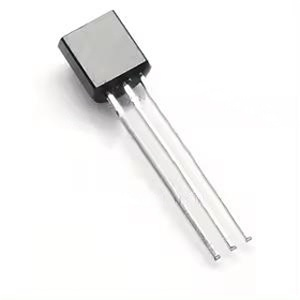
The A3141 is a unipolar Hall effect sensor designed for high-temperature applications. It operates with a single power supply and provides a digital output signal. The A3141 is particularly suitable for applications where the presence or absence of a magnetic field needs to be detected reliably, such as in position sensing, speed measurement, and proximity detection.
2. A3142 Hall Effect Sensor:
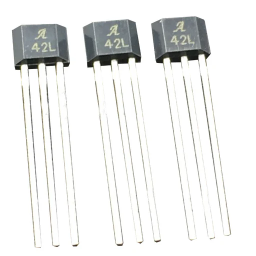
The A3142 is a unipolar Hall effect sensor with a latching behavior. It operates on a single power supply and provides a digital output that remains in its state until a magnetic field of opposite polarity is applied. The latching feature makes the A3142 ideal for applications requiring the detection and retention of a specific magnetic polarity, such as door and window position sensing, flow meters, and security systems.
3. A3143 Hall Effect Sensor:
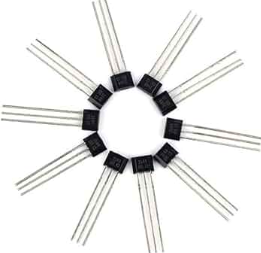
The A3143 is a bipolar Hall effect sensor that can detect both north and south magnetic fields. It operates on a single power supply and provides a digital output signal. The A3143 is commonly used in applications where the direction of the magnetic field needs to be determined, such as in brushless DC motor control, rotary encoders, and gear position detection.
4. A3144 Hall Effect Sensor:
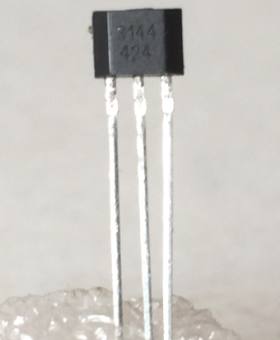
The A3144 is a unipolar Hall effect sensor designed for high sensitivity. It operates on a single power supply and provides a digital output signal. The A3144 is known for its high sensitivity to magnetic fields, making it suitable for applications requiring precise magnetic field detection, such as current sensing, distance measurement, and speed control.
Key Differences:
- Power Supply: All four sensors operate on a single power supply, simplifying their integration into various electronic systems.
- Output Signal: The A3141, A3142, A3143, and A3144 sensors provide a digital output signal, making them easy to interface with microcontrollers and digital circuits.
- Polarity Sensing: The A3142 is the only sensor in the series with latching behavior, allowing it to detect and retain a specific magnetic polarity.
- Field Sensitivity: The A3144 offers the highest sensitivity to magnetic fields among the sensors in this series, enabling it to detect even weak magnetic fields accurately.
- Bipolar Sensing: The A3143 is the only sensor capable of detecting both north and south magnetic fields, making it suitable for applications requiring direction detection.
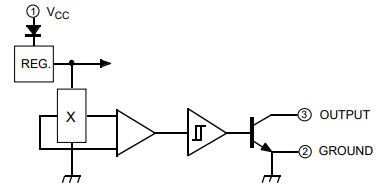
Diagram
Conclusion:
The A3141, A3142, A3143, and A3144 Hall effect sensors from Allegro Microsystems offer distinct features and capabilities tailored to different application requirements. Understanding the differences between these sensors is crucial in selecting the most suitable one for your specific application. Whether you need high-temperature operation, latching behavior, bipolar sensing, or high sensitivity, there is a Hall effect sensor in this series that can meet your needs. Consider the specific requirements of your application and refer to the datasheets and application notes provided by Allegro Microsystems to choose the optimal Hall effect sensor for your project.


Related Articles

CR2016 Vs CR2032: Which is More Widely Used
SN74HC132PWR: Datasheet, Pinout, Application
KSZ8999I 9-port IC: Datasheet, Application
2n2222a vs 2n2222 Transistor: Are they the same?
L298D vs L298N: A Comprehensive Comparison of Motor Driver
SS14 vs SS34 vs SS54 Schottky Power Diode: Pinout, Price & PDF
Cat5e vs. Cat6 RJ45 Cable: Ethernet Cables Comparison
LRS-350-24 AC DC Converters: Datasheet, Advantages, Video
TPS5410 Datasheet & Pinout Switching Regulator
2N2907 vs 2N3906 Transistor: Which is Better?
nRF24l01 2.4 GHz Transceiver Module: Datasheet & Pinout