Types of Switches: A Guide to Understanding and Utilizing Them
Introduction:

Switches are fundamental components in electrical and electronic systems, providing control over the flow of electricity. They allow us to turn devices on or off. In this article, we will explore different types of switching and their applications.
1. Toggle Switch:
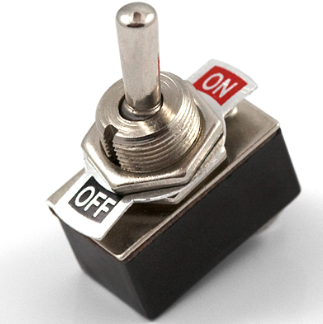
Toggle switches are familiar and widely used switches featuring a lever that can be flipped up or down, providing a simple on/off control. They are commonly found in household devices, lighting fixtures, and electronic equipment. Toggle switches are reliable, easy to use, and suitable for applications where a physical switch position is preferred.
types of toggle switches:
2. Push Button Switch:
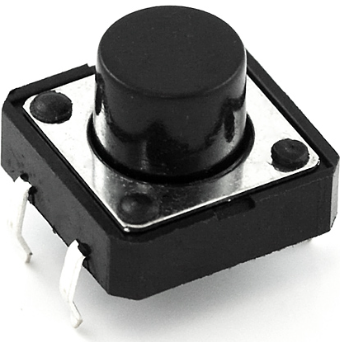
Push button switches are momentary switches that are activated by pressing and released when the pressure is released. They are often used for applications requiring temporary or intermittent control, such as doorbells, keyboards, and control panels. Push button switches can be normally open (NO) or normally closed (NC), and they return to their original state when not pressed.
3. Rotary Switch:
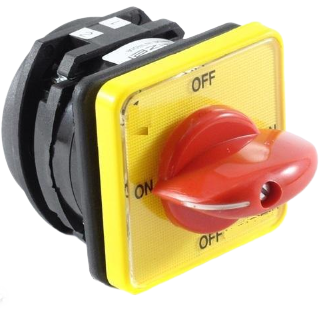
Rotary switches feature a rotating knob or lever that allows the user to select from multiple positions or settings. They are commonly used in devices where multiple options or functions need to be selected, such as audio equipment, industrial machinery, and home appliances. Rotary switches provide a compact and efficient way to control different modes or settings.
4. Rocker Switch:
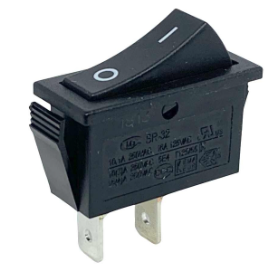
Rocker switches consist of a pivoting lever that rocks back and forth to turn the switch on or off. They are commonly used in household appliances, automotive applications, and industrial control panels. Rocker switches provide a visually clear indication of their state and are suitable for applications requiring a sleek and modern appearance.
5. Slide Switch:
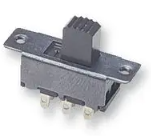
Slide switches feature a small lever that slides back and forth to open or close the circuit. They are used in various applications, including small electronic devices, audio equipment, and lighting controls. Slide switches are compact and space-saving, making them ideal for situations where size is a constraint.
6. DIP Switch:
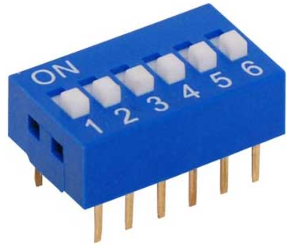
Dual In-Line Package (DIP) switches are small switches mounted in a row on a circuit board, typically used for configuration or setting changes. Each switch can be individually toggled to open or close the circuit, allowing for customization of device behavior or preferences. DIP switches are commonly found in computer peripherals, industrial control systems, and electronic modules.
7. Proximity Sensor:
![H}D{$TI2KY91%21$I~)]S8D](https://www.vessic.com/upload/image/content/20240315/b95b3ee6f23c0c57e9b49829d4a95933.png "b95b3ee6f23c0c57e9b49829d4a95933.png")
Proximity sensors are electronic switches that detect the presence or absence of an object within a certain range. They are used in automation, security systems, and robotics. Proximity sensors can be based on different technologies, including infrared, capacitive, and inductive.
Choosing the Right Switch:
When selecting a switch, consider the following factors:
- Electrical ratings: Ensure the switch can handle the voltage and current requirements of the circuit.
- Environment: Choose switches suitable for the operating environment, considering factors like temperature, humidity, and exposure to dust or moisture.
- Durability: Depending on the application, select switches with appropriate mechanical robustness and lifespan.
- Switching Speed: Consider the required response time for the switch to meet the system's needs.
- Ergonomics: For user interface applications, the switch should be comfortable and intuitive to operate.
BTW, There are also Web Smart Switches, Managed Switches, and Unmanaged Switches. These classifications are based on the level of control and management capabilities provided by the switches. Let's explore each type:
Unmanaged Switches:
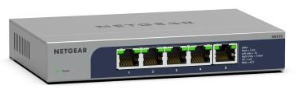
Unmanaged switches are the simplest type of switches. They are plug-and-play devices that require no configuration or management. Unmanaged switches operate at Layer 2 of the OSI model and provide basic connectivity by forwarding network traffic between connected devices. They are typically used in small home or office networks where simplicity and cost-effectiveness are prioritized. Unmanaged switches are suitable for environments where there is no need for advanced features or network optimization.
Managed Switches:

Managed switches are more advanced switches that offer a higher level of control, configuration, and monitoring capabilities. They provide options for customization, security, and network optimization. Managed switches can be configured to control network traffic, implement virtual LANs (VLANs), enable Quality of Service (QoS) settings, and more. They can also provide features such as port mirroring, link aggregation, and Spanning Tree Protocol (STP) for network redundancy. Managed switches are commonly used in medium to large-sized networks where fine-grained control and management are required.
Web Smart Switches (Smart Managed Switches):

Web Smart switches, also known as Smart Managed switches, fall between unmanaged and fully managed switches in terms of functionality and complexity. They offer a web-based graphical user interface (GUI) that allows for basic configuration and management. Web Smart switches provide features like VLANs, QoS, and port mirroring, but they may have some limitations compared to fully managed switches. They are suitable for small to medium-sized networks that require more control and configuration options than unmanaged switches but do not need the extensive capabilities of fully managed switches.
Ok, friends, that is our article about types of switches electrical, actually it is a broad topic, we have too much to talk about and next we will write about different types of light switches and types of generator transfer switches, please tuned.
Conclusion:
Switches are essential components in electrical and electronic systems, providing control and functionality. Understanding the different types of switches and their applications allows engineers, designers, and enthusiasts to select the appropriate switch for each specific need. Whether it's a simple toggle switch for everyday devices or a complex rotary switch for advanced settings, choosing the right switch ensures efficient and reliable operation in various electrical and electronic circuits.


Related Articles

Multivibrators,Astable Oscillator,Crystal Oscillator:Distinction
TVS Diode Types,Working Principle,Testing,Selection
Ryzen 9 7950X3D vs 7900X3D,7950X,7900X,5950X,5900X,3950X,3900X
Mastering GND in Circuits: Essential Guide for Safety
Electronica 2024:Munich Electronic Components Exhibition
Vess Electronics Component Distributor at ExpoElectronica 2024
Fuses Choosing Tutorial Top 10 Fuses Recommendation For 2024
How to Choose RTC Real Time Clock? Structure,Operation,Types
Step Recovery Diode: Symbol, Types, and Applications
MEMS accelerometer:Working, Application, Pros & Cons
What are the 4 Types of Filters?Distinction & Selection Tutorial