How Does An IGBT Rectifier Work?
Dear friends, this post is about How Does An IGBT Rectifier Work? And the content includes IGBT meaning, igbt vs mosfet, igbt module, igbt symbol and so on.
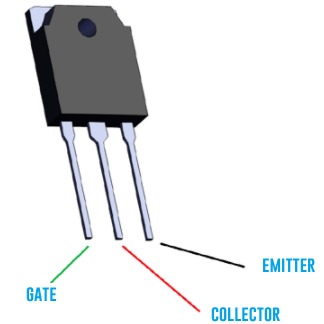
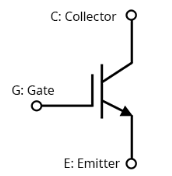
First of all, let's talk about what is IGBT?
IGBT Meaning
What does igbt mean?IGBT stands for Insulated Gate Bipolar Transistor. It is a power semiconductor device that combines the features of both the MOSFET (Metal-Oxide-Semiconductor Field-Effect Transistor) and the bipolar junction transistor (BJT). The IGBT is widely used in various applications, especially in power electronics and motor control systems.
The IGBT is designed to handle high voltage and high current levels while providing fast switching speeds. It consists of three main terminals: the collector, emitter, and gate. The collector and emitter terminals are associated with the bipolar transistor, while the gate terminal controls the conductivity of the device, similar to a MOSFET.
The insulating layer (typically made of oxide) between the gate and the transistor structure provides electrical isolation and prevents current flow into the control circuitry. This insulation allows the IGBT to be driven by low-power control signals while handling high-power levels on the collector-emitter path.
IGBTs are commonly used in applications such as power supplies, motor drives, renewable energy systems (such as solar inverters and wind turbine converters), electric vehicles, and industrial automation. They offer advantages such as high voltage and current ratings, low power consumption, and efficient switching characteristics.
IGBT symbol
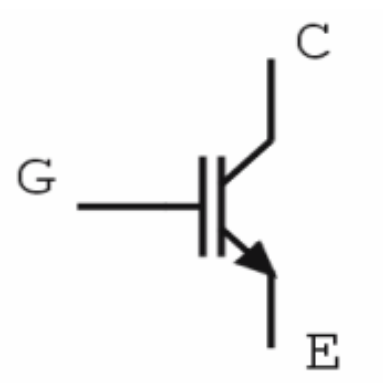
How to measure IGBT?
Measuring an IGBT (Insulated Gate Bipolar Transistor) typically involves checking its electrical characteristics and verifying its proper functioning. Here are some steps you can follow to measure an IGBT:
1. Preparation: Ensure that the IGBT is disconnected from any power source and make sure you have the necessary tools, including a multimeter or specialized testing equipment.
2. Visual Inspection: Inspect the IGBT for any physical damage, such as cracks, burns, or blown fuses. Any visible damage may indicate a faulty or damaged IGBT.
3. Continuity Check: Set your multimeter to the continuity or diode test mode. Place the multimeter's probes on the collector and emitter terminals of the IGBT. A good IGBT should show low resistance or continuity in both directions, indicating that there is no short circuit between the collector and emitter.
4. Gate Threshold Voltage: If you have access to the gate terminal, you can measure the gate threshold voltage. Connect the positive probe of your multimeter to the gate terminal and the negative probe to the emitter terminal. Apply a small positive voltage (around 5V) between the gate and emitter terminals and measure the voltage. The gate threshold voltage should typically be within a specified range mentioned in the IGBT's datasheet.
5. Voltage and Current Ratings: Ensure that the IGBT's voltage and current ratings match the requirements of your application. Check the datasheet or markings on the device to verify the maximum collector-emitter voltage (VCE) and collector current (IC) ratings.
6. Testing with a Testing Rig: In some cases, you may need specialized testing equipment or a testing rig to measure the IGBT's performance. This may involve applying voltage and current waveforms to the IGBT and observing its switching characteristics, such as rise and fall times, on-state voltage drop, and switching losses.
What is IGBT transistor?
An IGBT (Insulated Gate Bipolar Transistor) is a type of power semiconductor device that combines the characteristics of a MOSFET (Metal-Oxide-Semiconductor Field-Effect Transistor) and a BJT (Bipolar Junction Transistor). It is widely used in power electronic systems to control and switch high voltage and high current levels.
The structure of an IGBT consists of a PNP (Positive-Negative-Positive) bipolar transistor and an N-channel MOSFET integrated together. It has three main terminals: the collector, emitter, and gate.
The collector and emitter terminals are associated with the bipolar transistor portion of the device. They handle the high voltage and current levels and act as the main current path. The collector is typically connected to the positive rail, while the emitter is connected to the load or ground.
The gate terminal controls the conductivity of the IGBT and determines whether it is in an on-state or off-state. It is connected to the MOSFET portion of the device. The gate voltage controls the flow of current between the collector and emitter. When the gate voltage is applied, it creates a conducting channel between the collector and emitter, allowing current to flow. When the gate voltage is removed or reduced, the channel is turned off, blocking the current flow.
The insulation layer (typically made of oxide) between the gate and the transistor structure provides electrical isolation and prevents current flow into the gate control circuitry. This feature allows the IGBT to be driven by low-power control signals while handling high-power levels on the collector-emitter path.
IGBTs are commonly used in applications that require high voltage and current switching, such as motor drives, power supplies, renewable energy systems, electric vehicles, and industrial automation. They offer advantages such as fast switching speeds, high voltage and current ratings, low power consumption, and efficient operation.
What are some common applications where IGBT transistors are used?
IGBT transistors are used in a wide range of applications that require high voltage and current switching. Some common applications where IGBT transistors are used include:
1. Motor Drives: IGBTs are commonly employed in motor control systems for various applications, including industrial motors, electric vehicles, and railway traction systems. They allow efficient control of motor speed and torque by switching power to the motor.
2. Power Supplies: IGBTs are utilized in power supply systems, such as uninterruptible power supplies (UPS), welding machines, and high-power inverters. They enable the conversion of DC power to AC power with high efficiency and precise control.
3. Renewable Energy Systems: IGBTs play a crucial role in renewable energy systems like solar inverters and wind turbine converters. They convert the DC power generated by solar panels or wind turbines into usable AC power for residential, commercial, and grid applications.
4. Electric Vehicles (EVs): IGBTs are essential components in the power electronics systems of electric vehicles. They enable efficient control of power flow between the battery pack and the electric motor, contributing to the overall performance and range of the vehicle.
5. Industrial Automation: IGBTs find application in industrial automation systems, including robotics, machine tools, and factory automation. They provide precise and reliable control of high-power devices, such as servo motors and motorized actuators.
6. High-Voltage DC Transmission: IGBTs are utilized in high-voltage direct current (HVDC) transmission systems for efficient long-distance power transmission. They enable the conversion between AC and DC power and facilitate the control and regulation of power flow in the transmission network.
7. UPS Systems: Uninterruptible Power Supply (UPS) systems employ IGBTs to provide backup power during mains power failures. They ensure a seamless transition from the main power supply to the battery backup, maintaining continuous power to critical loads.
What is IGBT rectifier?
An IGBT (Insulated Gate Bipolar Transistor) rectifier is a type of power electronic device used for converting alternating current (AC) into direct current (DC). It combines the advantages of both bipolar junction transistors (BJTs) and metal-oxide-semiconductor field-effect transistors (MOSFETs) to achieve high current and voltage ratings with efficient switching capabilities.
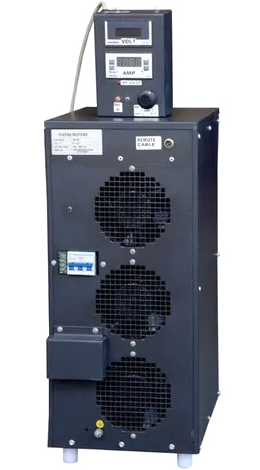
To understand how an IGBT rectifier works, let's break it down into the following steps:
1. AC Input: The IGBT rectifier is typically connected to an AC power source, such as the electrical grid. The AC voltage is applied to the rectifier input terminals.
2. Rectification: The IGBT rectifier converts the AC input into DC output. It does this by using a rectifier bridge circuit, typically made up of four IGBTs arranged in a bridge configuration. The IGBTs are controlled by gate signals to switch on and off at specific times.
3. Half-Bridge Operation: The rectifier operates in a half-bridge configuration, where two IGBTs are switched on at a time. One IGBT conducts current during the positive half-cycle of the AC input, while the other conducts during the negative half-cycle. This arrangement allows for unidirectional current flow through the load.
4. IGBT Switching: The gate terminals of the IGBTs are controlled by a pulse width modulation (PWM) signal. The PWM signal determines the on and off times of the IGBTs, thereby controlling the amount of current flowing through the load. By adjusting the duty cycle of the PWM signal, the rectifier can regulate the output voltage or current.
5. Voltage and Current Control: The IGBT rectifier can regulate the output voltage or current by adjusting the PWM signal. By varying the duty cycle, the rectifier can control the effective voltage applied to the load. This control allows for precise regulation and efficient power conversion.
6. Filtering: Depending on the specific application, additional filtering components such as capacitors and inductors may be used to smooth out the output ripple and reduce harmonics in the output waveform.
By utilizing the IGBTs and precise control of switching operations, the IGBT rectifier efficiently converts AC power to DC power while providing control over the output voltage or current. It finds applications in various industries, including power electronics, motor drives, renewable energy systems, and industrial automation.
MOSFETs vs IGBT vs BTJs vs FET vs GaN
There are several types of transistors commonly used in electronic circuits, each with its own advantages and performance characteristics. Here's a comparison of some of the key types of transistors:
Metal-Oxide-Semiconductor FET (MOSFET):
Advantages: High input impedance, low power consumption, fast switching speed, excellent voltage handling capability.
Disadvantages: Higher gate capacitance, vulnerable to static electricity.
Insulated Gate Bipolar Transistor (IGBT):
Advantages: High current and voltage handling capability, fast switching speed, low saturation voltage, suitable for high-power applications.
Disadvantages: Relatively slower switching speed compared to MOSFET, moderate input impedance.
Bipolar Junction Transistor (BJT):
Advantages: High current gain, low saturation voltage, fast switching speed.
Disadvantages: Relatively higher power dissipation, limited voltage handling capability, requires current to drive the base.
Field-Effect Transistor (FET):
Junction Field-Effect Transistor (JFET):
Advantages: Simpler construction, low noise, good high-frequency performance.
Disadvantages: Relatively lower input impedance, not suitable for high-power applications.
Gallium Nitride Transistor (GaN):
Advantages: Very high-speed switching, low on-resistance, excellent high-frequency performance, high breakdown voltage.
Disadvantages: Higher cost, relatively new technology, sensitive to voltage spikes.
The choice of transistor type depends on the specific application requirements. Here are some general considerations:
High-Frequency Applications: GaN and MOSFETs are often preferred due to their fast switching speed and excellent high-frequency performance.
High-Power Applications: IGBTs and high-power MOSFETs are commonly used for their high current and voltage handling capabilities.
Low-Power Applications: MOSFETs are often a good choice due to their low power consumption and high input impedance.
Analog Amplification: BJTs are often used in analog circuits due to their high current gain and linearity.


Frequently Asked Questions
Related Articles

Multivibrators,Astable Oscillator,Crystal Oscillator:Distinction
TVS Diode Types,Working Principle,Testing,Selection
Ryzen 9 7950X3D vs 7900X3D,7950X,7900X,5950X,5900X,3950X,3900X
Mastering GND in Circuits: Essential Guide for Safety
Electronica 2024:Munich Electronic Components Exhibition
Vess Electronics Component Distributor at ExpoElectronica 2024
Fuses Choosing Tutorial Top 10 Fuses Recommendation For 2024
How to Choose RTC Real Time Clock? Structure,Operation,Types
Step Recovery Diode: Symbol, Types, and Applications
MEMS accelerometer:Working, Application, Pros & Cons
What are the 4 Types of Filters?Distinction & Selection Tutorial