TL494 Pulse-Width-Modulation Control Circuits: Datasheet
Let's Exploring the Versatility of TL494 Pulse-Width-Modulation Control Circuits
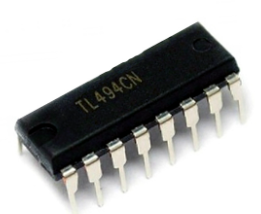
Introduction:
In the realm of electronics, pulse-width modulation (PWM) control circuits play a crucial role in a wide range of applications. Among the various PWM controllers available, the TL494 stands out as a versatile and widely used device. This article delves into the features and applications of the TL494 PWM control circuit, shedding light on its significance in modern electronics.
Overview of TL494:
The TL494 is an integrated circuit that incorporates all the necessary components for generating accurate PWM signals. It boasts a myriad of features, including dual error amplifiers, a voltage reference, an oscillator, a dead-time control comparator, a pulse-steering flip-flop, and more. This integration enables the TL494 to perform various functions required in PWM control circuits efficiently.
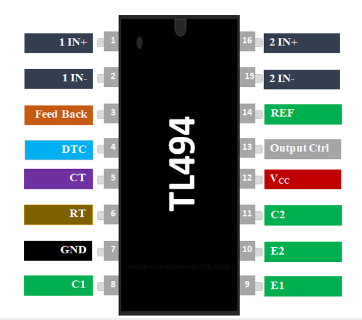
Working Principle:
The TL494 operates by comparing a reference voltage with a feedback signal obtained from the output. By continuously adjusting the duty cycle of the PWM signal, it regulates the power delivered to the load. The device employs a closed-loop control mechanism, making it capable of maintaining stable and precise output levels even under varying conditions.
Key Features and Benefits:
Flexibility: The TL494 offers flexible control options, allowing for adjustable frequency, duty cycle, and dead time settings. This versatility makes it suitable for a wide range of applications, such as motor speed control, power supply regulation, lighting control, and audio amplification.
Protection Mechanisms: The TL494 includes built-in protection features to safeguard both the controller and the load. Overcurrent protection, overvoltage protection, and thermal shutdown capabilities ensure the safe operation of the system, preventing damage caused by excessive current or temperature.
High Efficiency: Thanks to its efficient switching mechanism, the TL494 minimizes power losses and maximizes energy efficiency. This quality is particularly important in applications where power consumption is a critical factor.
Applications:
Power Supplies: The TL494 is widely used in switch-mode power supplies (SMPS) to regulate the output voltage and current. Its ability to control the duty cycle and frequency makes it ideal for designing high-performance and efficient power supply units.
Motor Control: With its precise control capabilities, the TL494 finds extensive use in motor control applications. It enables smooth speed control of motors, ensuring optimal performance in various systems such as robotics, industrial automation, and electric vehicles.
Lighting Control: From LED lighting to fluorescent lamps, the TL494 proves invaluable in controlling the brightness levels and achieving dimming effects. Its ability to modulate the pulse width allows for seamless and efficient lighting control.
Audio Amplification: The TL494’s PWM control circuitry also finds application in audio amplifiers. By modulating the pulse width, it enables efficient amplification while minimizing distortion and power wastage.
TL494 Circuit
![I[LZUVY(K8~_IE7]4)Z]{}I](/upload/image/content/20231024/ece4b506b5e655872be419701f28dfe1.png "ece4b506b5e655872be419701f28dfe1.png")
Conclusion:
The TL494 pulse-width-modulation control circuit stands as a versatile and indispensable component in numerous electronic systems. Its flexibility, protection mechanisms, and high efficiency make it well-suited for a wide range of applications, including power supplies, motor control


Related Articles

CR2016 Vs CR2032: Which is More Widely Used
SN74HC132PWR: Datasheet, Pinout, Application
KSZ8999I 9-port IC: Datasheet, Application
2n2222a vs 2n2222 Transistor: Are they the same?
L298D vs L298N: A Comprehensive Comparison of Motor Driver
SS14 vs SS34 vs SS54 Schottky Power Diode: Pinout, Price & PDF
Cat5e vs. Cat6 RJ45 Cable: Ethernet Cables Comparison
LRS-350-24 AC DC Converters: Datasheet, Advantages, Video
TPS5410 Datasheet & Pinout Switching Regulator
2N2907 vs 2N3906 Transistor: Which is Better?
nRF24l01 2.4 GHz Transceiver Module: Datasheet & Pinout