Exploring the L4984D Controller: Datasheet, Pinout
Hi, guys!Today let's Exploring the L4984D Controller: Datasheet, Pinout and more details
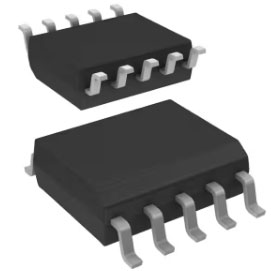
Current-mode PFC controller operating with line-modulated fixed-off-time control
Introduction:
In the world of power electronics, efficient power management is crucial for achieving optimal performance and minimizing energy waste. Power Factor Correction (PFC) plays a vital role in improving power quality and reducing harmonics in a wide range of applications. The L4984D is a highly versatile Power Factor Correction (PFC) controller that provides an effective and efficient solution for achieving high power factor and low total harmonic distortion.
Overview of the L4984D:
The L4984D is a Power Factor Correction (PFC) controller chip developed by STMicroelectronics, a leading semiconductor manufacturer. This device offers a comprehensive set of features and control mechanisms to enable designers to implement efficient PFC solutions in a wide range of power applications.
L4984D Pinout

Key Features and Benefits:
High Power Factor and Low Harmonic Distortion: The L4984D is specifically designed to achieve high power factor correction and low total harmonic distortion (THD). By actively regulating the input current waveform, it improves the power factor and helps to comply with stringent power quality standards.
Wide Range of Input Voltage and Load Conditions: The controller supports a wide input voltage range, typically between 85VAC and 265VAC, making it suitable for various applications, including industrial, commercial, and consumer electronics. It also provides robust performance across a wide range of load conditions.
Continuous Conduction Mode (CCM) and Discontinuous Conduction Mode (DCM): The L4984D supports both Continuous Conduction Mode (CCM) and Discontinuous Conduction Mode (DCM) operation, allowing designers to optimize the PFC performance based on specific application requirements. This flexibility enhances efficiency and ensures reliable operation under varying load conditions.
Adaptive Voltage Control: The controller integrates an adaptive voltage control loop that regulates the output voltage, compensating for fluctuations in the input voltage and load variations. This feature ensures stable and accurate output voltage regulation, even in the presence of disturbances.
Protection and Safety Features: The L4984D incorporates various protection mechanisms to safeguard the system and the controller itself. These include overvoltage protection (OVP), overcurrent protection (OCP), and thermal shutdown, which ensure reliable and safe operation under fault conditions.
Easy Implementation and Design Flexibility: The L4984D comes in a compact and industry-standard SO-16 package, making it easy to integrate into existing designs. Moreover, it offers a high degree of design flexibility, allowing customization and optimization to meet specific application requirements.
Applications:
The L4984D finds applications in a wide range of power systems that require power factor correction and high energy efficiency. Some common applications include:
Power Supplies: The L4984D is widely used in switched-mode power supplies (SMPS) and AC-DC converters to improve power factor and ensure compliance with power quality standards.
LED Lighting: With the growing popularity of energy-efficient LED lighting, the L4984D plays a vital role in achieving high power factor correction and low THD in LED driver circuits.
Appliances and Industrial Equipment: The controller is employed in various appliances, such as air conditioners, refrigerators, and washing machines, where efficient power management and compliance with power quality regulations are essential.
Conclusion:
The L4984D Power Factor Correction (PFC) controller offers a comprehensive set of features and benefits, making it an attractive choice for designers seeking efficient power management solutions. With its ability to achieve high power factor correction, low harmonic distortion, and a wide input voltage range, the L4984D empowers designers to develop energy-efficient systems that comply with stringent power quality regulations. Its versatility and robust performance make it a compelling option for a wide range of power applications, from consumer electronics to industrial equipment.


Related Articles

2N5551 vs BC547 BJTs Comparison
LM3914 vs LM3915 vs LM3916 vs LM3917 How They Work?
Top 12 electronic component distributors 2024
TPS5450DDAR Datasheet, Pinout, Specification
C945 Transistor Datasheet:C1815 VS C945 Comparison
Lithium Battery Charger TP4056: Datasheet, Schematic, Price
TDA7265 Audio Amplifier:How To Connect And Test?
1n4007 vs 1n5399 Rectifier Diode: Pinout, Datasheet, Specifications
SN74HC595N vs SN74HC574N Shift Register Datasheet,Specs
H6 vs H7 vs H8 vs H9 Battery Difference and Choosing Guide
ADRV9009BBCZ RF Description, Datasheet, Specification