Coaxial Cable: A Versatile Solution for Signal Transmission
yunying Release time:2023-11-20 Page View:185
Introduction
Coaxial cables have long been a staple in the field of telecommunications and electronic signal transmission. With their unique construction and excellent shielding capabilities, coaxial cables have found applications in various industries. In this article, we will explore the description, construction, types, and applications of coaxial cables, shedding light on their importance and versatility.
Description of Coaxial Cable:
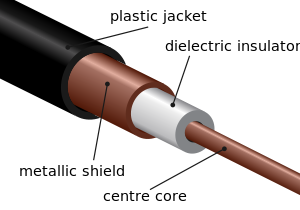
Coaxial cable is a type of transmission line that consists of a central conductor, an insulating layer, a metallic shield, and an outer insulating sheath. The cable's design minimizes signal loss, interference, and electromagnetic radiation, making it suitable for high-frequency transmissions.
Construction of Coaxial Cable:
1. Central Conductor:
- The central conductor is typically a solid or stranded copper wire. It carries the signal and provides the pathway for the transmission.
2. Insulating Layer (Dielectric):
- Surrounding the central conductor is an insulating layer, also known as the dielectric. The dielectric material, such as polyethylene (PE), polypropylene (PP), or foam, ensures electrical isolation and maintains the integrity of the transmitted signal.
3. Metallic Shield:
- A metallic shield encases the insulating layer, serving as a barrier against external electromagnetic interference. It prevents the signal from leaking out and protects it from external noise. The shield is usually made of braided or foil-wrapped copper.
4. Outer Insulating Sheath:
- The outermost layer of the coaxial cable is the insulating sheath. It protects the cable from physical damage, moisture, and environmental factors. Common materials used for the sheath include PVC (Polyvinyl Chloride) or low-smoke zero-halogen (LSZH) compounds.
Types of Coaxial Cable:
There are various types of coaxial cables available, each designed for specific applications. Some common types include:
- RG-6: Primarily used for cable television (CATV) and satellite TV installations.
- RG-59: Commonly used for analog video and CCTV applications.
- RG-11: Suitable for long-distance video and high-bandwidth applications.
- RG-58: Often utilized for Ethernet and computer networking applications.
Application of Coaxial Cable:
1. Telecommunications:
- Coaxial cables are extensively used in telecommunications networks for transmitting voice, data, and video signals over long distances.
2. Broadcast and Video:
- Coaxial cables are essential in broadcasting and video applications, such as transmitting television signals, connecting cameras, and distributing audio/video signals in studios.
3. Internet and Networking:
- Coaxial cables are employed in networking systems, particularly in cable internet connections and older Ethernet installations.
4. CCTV and Security Systems:
- Coaxial cables play a vital role in closed-circuit television (CCTV) systems, connecting cameras to monitoring equipment for surveillance purposes.
5. RF and Microwave Systems:
- Coaxial cables are widely used in RF and microwave systems, including radar systems, wireless communication, satellite links, and test equipment.
6. Medical Equipment:
- Coaxial cables find applications in medical equipment, such as MRI machines and ultrasound devices, where high-quality signal transmission is essential.
7. Aerospace and Defense:
- Coaxial cables are utilized in aerospace and defense applications, such as radar systems, avionics, and military communication systems.
Additional Aspects
- Coaxial cables can support different impedance levels, including 50 ohms and 75 ohms, to suit specific requirements.
- Connectors commonly used with coaxial cables include BNC (Bayonet Neill-Concelman), F-type, N-type, and SMA (SubMiniature version A).
- Coaxial cables exhibit low signal loss, high bandwidth capabilities, and resistance to electromagnetic interference (EMI).
- The transmission capacity of coaxial cables depends on factors such as cable type, impedance, length, and frequency range.
Conclusion
Coaxial cables have revolutionized the field of signal transmission with their robust construction and versatile applications. Their ability to transmit high-frequency signals while minimizing interference makes them indispensable in telecommunications, broadcasting, networking, security systems, and many other industries. Understanding the description, construction, types, and applications of coaxial cables empowers engineers and technicians to select the right cable for their specific needs, ensuring efficient and reliable signal transmission.
- Share this post
-


Frequently Asked Questions
Related Articles

Multivibrators,Astable Oscillator,Crystal Oscillator:Distinction
TVS Diode Types,Working Principle,Testing,Selection
Ryzen 9 7950X3D vs 7900X3D,7950X,7900X,5950X,5900X,3950X,3900X
Mastering GND in Circuits: Essential Guide for Safety
Electronica 2024:Munich Electronic Components Exhibition
Vess Electronics Component Distributor at ExpoElectronica 2024
Fuses Choosing Tutorial Top 10 Fuses Recommendation For 2024
How to Choose RTC Real Time Clock? Structure,Operation,Types
Step Recovery Diode: Symbol, Types, and Applications
MEMS accelerometer:Working, Application, Pros & Cons

-
1,000+Daily Order Quantity
-
2,500,000+Alternative Parts
-
2,200+Worldwide Manufacturers
-
10,000 ㎡In-stock Warehouse