The Powerhouse of Data Centers: Exploring AMD EPYC Processors
Introduction:
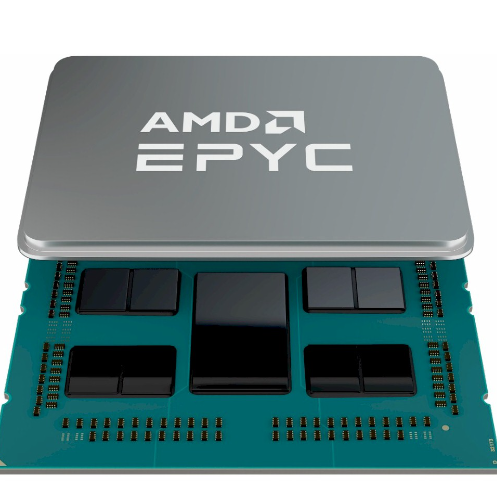
In the ever-evolving landscape of data centers and enterprise computing, AMD EPYC processors have emerged as a powerful and innovative solution. AMD's EPYC lineup is designed to deliver exceptional performance, scalability, and security, catering to the demanding requirements of modern data centers. In this article, we will explore the key features and advantages of AMD EPYC processors and understand how they have made their mark in the industry.
Unleashing Unparalleled Performance:
AMD EPYC processors are engineered to provide remarkable performance across a wide range of workloads. With a highly scalable architecture, EPYC processors offer an impressive number of cores and threads, enabling simultaneous multi-threading and efficient task execution. This translates into significantly improved performance for applications that can leverage multiple cores, such as virtualization, cloud computing, and high-performance computing.
Unrivaled Core and Thread Count:
One of the standout features of AMD EPYC processors is their core and thread count. Built on the Zen architecture, EPYC processors can offer an impressive number of cores, ranging from 8 to 64 cores per socket, depending on the specific model. Additionally, with simultaneous multi-threading (SMT) technology, each core can handle two threads, effectively doubling the number of available threads. This abundance of cores and threads allows EPYC processors to handle highly parallel workloads with ease, delivering exceptional performance and responsiveness.
Scalability for Growing Workloads:
Data centers need to accommodate ever-increasing workloads and scale their resources accordingly. AMD EPYC processors excel in this aspect by providing excellent scalability. EPYC processors support multi-socket configurations, allowing businesses to scale their computing power by adding more processors to a server. This scalability ensures that data centers can adapt to growing demands without the need for significant infrastructure changes, providing a cost-effective and future-proof solution.
Advanced Security Features:
Security is a critical concern for data centers, and AMD EPYC processors incorporate several advanced features to address these concerns. EPYC processors include a dedicated security subsystem known as AMD Infinity Guard, which helps safeguard data integrity and system security. Additionally, EPYC processors support Secure Memory Encryption (SME) and Secure Encrypted Virtualization (SEV) technologies, providing enhanced protection for data in memory and virtual machine environments.
Efficiency and Total Cost of Ownership (TCO):
AMD EPYC processors offer exceptional performance per watt, making them highly energy-efficient. With their high core density and power-efficient design, EPYC processors can deliver substantial performance while minimizing power consumption. This efficiency not only reduces operational costs but also contributes to a greener and more sustainable data center environment. By maximizing performance while minimizing power requirements, EPYC processors help organizations optimize their total cost of ownership (TCO).
Conclusion:
AMD EPYC processors have established themselves as a force to be reckoned with in the data center market. Their impressive core and thread count, scalability, advanced security features, and energy efficiency make them an attractive choice for businesses seeking high-performance computing solutions. As data centers continue to evolve and demand more computing power, AMD EPYC processors provide a reliable and future-proof foundation to meet those requirements. With their innovative technology and commitment to pushing the boundaries of performance, AMD has solidified its position as a key player in the data center ecosystem.


Frequently Asked Questions
Related Articles

Multivibrators,Astable Oscillator,Crystal Oscillator:Distinction
TVS Diode Types,Working Principle,Testing,Selection
Ryzen 9 7950X3D vs 7900X3D,7950X,7900X,5950X,5900X,3950X,3900X
Mastering GND in Circuits: Essential Guide for Safety
Electronica 2024:Munich Electronic Components Exhibition
Vess Electronics Component Distributor at ExpoElectronica 2024
Fuses Choosing Tutorial Top 10 Fuses Recommendation For 2024
How to Choose RTC Real Time Clock? Structure,Operation,Types
Step Recovery Diode: Symbol, Types, and Applications
MEMS accelerometer:Working, Application, Pros & Cons
What are the 4 Types of Filters?Distinction & Selection Tutorial