How to Choose RTC Real Time Clock? Structure,Operation,Types
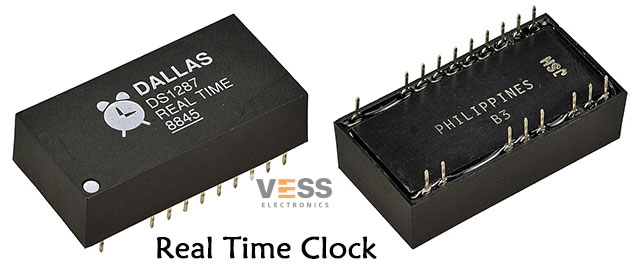
1. RTC Real Time Clock -- What Is It?
Dear friends, this post is about RTC Real Time Clock Structure, Operation, Classification Explained
RTC Definition:
A Real-Time Clock (RTC) is a small electronic device that keeps track of the current time and date, even when the main power supply is turned off. RTCs are used in a wide variety of applications, including computers, embedded systems, and industrial equipment.
Real-Time Clock Format:
The time and date kept by an RTC is typically stored in a binary format, such as the Unix timestamp. This format represents the number of seconds that have elapsed since a specific point in time, such as the beginning of the Unix epoch (January 1, 1970 at 00:00:00 UTC).
What Regulates the Real-Time Clock RTC?
An RTC is typically regulated by a crystal oscillator. This is a small electronic device that vibrates at a very precise frequency. The vibrations of the crystal oscillator are used to keep track of time, and the accuracy of the RTC depends on the accuracy of the crystal oscillator.
2. Real-Time Clocks Structure (What's In Real-Time Clocks)
The basic structure of an RTC includes:
- A crystal oscillator: This provides the precise timing reference for the RTC.
- A counter: This counts the number of oscillations from the crystal oscillator and increments the time accordingly.
- A register: This stores the current time and date.
- A battery: This provides backup power to the RTC in the event of a power failure.
3. Working of RTC(Operation)
The operation of an RTC is relatively simple. The crystal oscillator generates a precise timing signal, which is then used by the counter to increment the time. The current time and date are stored in the register, and the battery provides backup power in the event of a power failure.
4. Real-Time Clocks Classification
RTCs can be classified into two main types:
- Synchronous RTCs: These RTCs are synchronized with the system clock. This means that the RTC time is always the same as the system time.
- Asynchronous RTCs: These RTCs are not synchronized with the system clock. This means that the RTC time can be different from the system time.
5. How to Use Real Time Clock?
Real Time Clock Reset -- How to Do?
To reset an RTC, you need to short the RST pin to ground. This will reset the RTC to its default settings.
How to Wire Real-Time Clock
The wiring of an RTC is relatively simple. The following diagram shows how to wire an RTC to a microcontroller:

How to Use a Real-Time Clock Module with the Arduino
To use an RTC module with the Arduino, you can use the RTClib library. This library provides a simple interface for accessing the RTC module. The following code shows how to use the RTClib library to get the current time:
```
#include
RTC_DS1307 rtc;
void setup() {
Serial.begin(9600);
rtc.begin();
}
void loop() {
DateTime now = rtc.now();
Serial.println(now.year(), '-', now.month(), '-', now.day());
Serial.println(now.hour(), ':', now.minute(), ':', now.second());
delay(1000);
}
```
6. How to Select Suitable Real-Time Clock Chip?
When selecting a real-time clock chip, there are a few factors to consider:
- Accuracy: The accuracy of an RTC is measured in parts per million (ppm). The lower the ppm, the more accurate the RTC.
- Power consumption:** The power consumption of an RTC is measured in milliamps (mA). The lower the mA, the less power the RTC consumes.
- Features: Some RTCs have additional features, such as alarms, timers, and temperature sensors.
7. What is the Difference Between System Clock and RTC?
The system clock is the clock that is used by the operating system to keep track of time. The RTC is a separate clock that is used to keep track of time even when the system is turned off.
The system clock is typically synchronized with the RTC, but it can drift over time. This is because the system clock is based on the computer's internal clock, which can be affected by factors such as temperature and voltage fluctuations.
The RTC, on the other hand, is not affected by these factors. This makes it a more reliable source of timekeeping.
TYPES

Radio-based RTCs.
Software-based RTCs.
Historic RTCs.
There are several types of real-time clocks (RTCs) available, each with its own specific features and applications. Here are some commonly used RTC types:
1. Battery-Powered RTC: This is the most basic type of RTC that relies on a small battery to maintain accurate timekeeping even when the main power source is disconnected. It is commonly found in computers, embedded systems, and consumer electronics.
2. Network Time Protocol (NTP) RTC: NTP is a protocol used to synchronize time across computer networks. NTP-based RTCs use network connectivity to obtain accurate time information from NTP servers, allowing devices to have precise timekeeping.
3. GPS-Based RTC: These RTCs use signals from Global Positioning System (GPS) satellites to determine accurate time and date information. GPS-based RTCs are commonly used in applications that require precise timing, such as navigation systems and scientific instruments.
4. Internet Time Servers: Some devices rely on connecting to internet time servers to obtain accurate time information. These servers synchronize their time with highly accurate atomic clocks, providing precise timekeeping for devices that rely on internet connectivity.
5. Radio-Controlled RTC: Radio-controlled clocks receive time signals from long-wave radio transmitters that are operated by national timekeeping organizations. These clocks automatically adjust themselves to maintain accurate time based on the received radio signals.
6. Chip-Scale Atomic Clock (CSAC): CSACs are miniature atomic clocks that provide extremely accurate timekeeping in a compact form factor. They are often used in applications where precise timing is critical, such as aerospace, telecommunications, and scientific research.
CLASSIFICATION
1. Technology:
a. Crystal Oscillator-Based RTC: This type of RTC uses a crystal oscillator as a timing reference. It offers high accuracy and stability.
b. Temperature-Compensated RTC: These RTCs include temperature compensation circuits to maintain accurate timekeeping even in varying temperature conditions.
2. Interface:
a. Serial RTC: These RTCs communicate with the host system using a serial interface such as I2C (Inter-Integrated Circuit) or SPI (Serial Peripheral Interface).
b. Parallel RTC: These RTCs use a parallel interface for communication with the host system.
3. Features:
a. Basic RTC: A basic RTC provides timekeeping functions, including seconds, minutes, hours, day, date, month, and year.
b. Advanced RTC: Some RTCs offer additional features such as alarms, timers, battery backup, power management, and synchronization with external time references like GPS (Global Positioning System).
Related articles
How to Add DS1307, DS3231, PCF8563 RTC with Arduino: Tutorial
PCF8563T/5 RTCs Datasheet, Pinout, Specification
DS3231M+ RTC Module: A Timer pinout & PDF
PCF8563 vs DS1307:Arduino-Compatible Real-Time Clock (RTC)Module


Frequently Asked Questions
Related Articles

Raspberry Pi and Microcontrollers Detailed Comparison
A classification to converters
RTX4070 VS RTX4080 VS RTX4090 GPUs Comparison
Introducing the LOONGSON LS3A6000 CPU
Flip-Flop Electronics, How Flip Flops Work, Types, Application,
Basis of Alkaline Batteries, Lithium vs Alkaline Batteries vs Nickel
Electrical Connector Recognition:Types,Construction,Connecting Method
Coaxial Cable: A Versatile Solution for Signal Transmission
The Future of AI: Elon Musk's Concerns and the Birth of xAI Grok
What's the Difference Between Amplifier and Operational Amplifier
How to Fix an iPhone Flashlight That Isn’t Working