Multiplexing In Networking:Multiplexing & Demultiplexing Examples
yunying Release time:2024-03-04 Page View:882
Introduction:
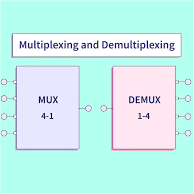
In the world of computer networking, the efficient transmission of data is crucial. Multiplexing is a technique that allows multiple signals or streams of data to be combined and transmitted over a single communication channel, maximizing its utilization. By utilizing multiplexing, multiple users can share the same network resources simultaneously. In this article, we will explore the concept of multiplexing in networking, its importance, and the various types of multiplexing techniques employed.
- 1.Multiplexing definition(What is multiplexing in networking)
- 2.Demultiplexing definition (what is demultiplexing in computer network)
- 3.Types of Multiplexing & Demultiplexing
- 4. Multiplexing and Demultiplexing
- 4.1 What is difference between multiplexer and demultiplexer?
- 4.2 Multiplexer and Demultiplexer truth table
- 5.What is multiplexer and demultiplexer with example?
- 6.Why is multiplexing and demultiplexing necessary in modern networks?
- 7.What is multiplexer advantages and disadvantages?
- Conclusion
1.Multiplexing definition(What is multiplexing in networking)
Multiplexing Definition:
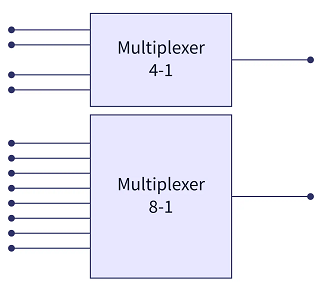
Multiplexing, in the context of networking, refers to the process of combining multiple signals or data streams into a single composite signal or stream for transmission over a shared medium. It enables multiple users or devices to share a network resource, such as a cable or wireless channel, efficiently. Multiplexing optimizes the utilization of the available bandwidth, improving the overall efficiency and throughput of the network.
2.Demultiplexing definition (what is demultiplexing in computer network)
Demultiplexing Definition:
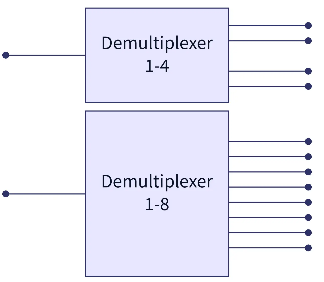
Demultiplexing is the reverse process of multiplexing. It involves the extraction and separation of individual signals or data streams from a composite signal or stream. Demultiplexing takes place at the receiving end of a network transmission, where the composite signal is dissected into its constituent parts for further processing or delivery to the respective recipients.
3.Types of Multiplexing & Demultiplexing
Types of Multiplexing:
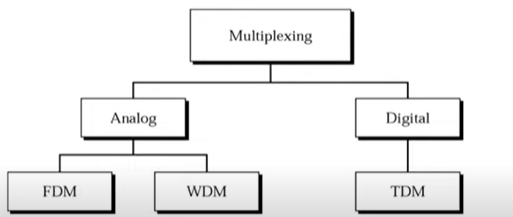
There are several types of multiplexing techniques employed in networking, each suited for specific scenarios and requirements. The three major multiplexing techniques are:
1. Time Division Multiplexing (TDM):
Time Division Multiplexing is a technique where multiple signals are interleaved in time. Each signal is assigned a fixed time slot within a predefined cycle. The signals take turns occupying the channel during their respective time slots. TDM is commonly used in applications where the data rate of each signal is relatively low compared to the available bandwidth. Examples include traditional telephone networks and digital circuit-switched connections.
2. Frequency Division Multiplexing (FDM):
Frequency Division Multiplexing involves the simultaneous transmission of multiple signals by allocating different frequency ranges to each signal. The available bandwidth is divided into non-overlapping frequency bands, with each band dedicated to a specific signal. FDM is widely used in applications where the bandwidth requirements of individual signals vary. It is commonly employed in radio and television broadcasting, where different channels operate within distinct frequency ranges.
3. Wavelength Division Multiplexing (WDM):
Wavelength Division Multiplexing is primarily used in optical fiber communication systems. WDM simultaneously transmits multiple optical signals at different wavelengths (colors) through a single fiber optic cable. By utilizing different wavelengths, each signal remains independent and can be demultiplexed at the receiving end. WDM greatly enhances the capacity and efficiency of fiber optic networks, enabling high-speed data transmission over long distances.
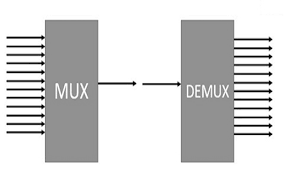
the classification of demultiplexing and the types of multiplexers and demultiplexers.
Types of Demultiplexing:
Demultiplexing is the process of separating a multiplexed signal into its individual component signals. It can be classified into the following types:
1.Time Division Demultiplexing (TDD): TDD is the process of extracting individual signals from a time-division multiplexed (TDM) signal. It involves identifying the time slots allocated to each signal and extracting the corresponding data during those time intervals.
2.Frequency Division Demultiplexing (FDD): FDD is used to separate signals that have been multiplexed using frequency division multiplexing (FDM). It involves filtering out the specific frequency bands assigned to each signal, allowing them to be reconstructed as individual signals.
3.Wavelength Division Demultiplexing (WDD): WDD is used in optical fiber communications to separate multiple signals that have been multiplexed using wavelength division multiplexing (WDM). It involves separating the different wavelengths of light and directing them to their respective receivers.
Types of Multiplexers:
A multiplexer (MUX) is a device used to combine multiple input signals into a single output signal. The types of multiplexers are based on the number of input lines and select lines they have:
2-to-1 Multiplexer: A 2-to-1 multiplexer has two input lines and one select line. The select line determines which input signal is passed through to the output.
4-to-1 Multiplexer: A 4-to-1 multiplexer has four input lines and two select lines. The select lines are used to choose one of the four input signals to be transmitted to the output.
8-to-1 Multiplexer: An 8-to-1 multiplexer has eight input lines and three select lines. The select lines determine which of the eight input signals is routed to the output.
16-to-1 Multiplexer: A 16-to-1 multiplexer has sixteen input lines and four select lines. The select lines are used to select one of the sixteen input signals to be transmitted to the output.
Types of Demultiplexers:
A demultiplexer (DEMUX) is a device used to separate a multiplexed signal into its original component signals. The types of demultiplexers correspond to the types of multiplexers:
1-to-2 Demultiplexer: A 1-to-2 demultiplexer has one input line and two output lines. The select line determines which output line the input signal is directed to.
1-to-4 Demultiplexer: A 1-to-4 demultiplexer has one input line and four output lines. The select lines are used to choose one of the four output lines to receive the input signal.
1-to-8 Demultiplexer: A 1-to-8 demultiplexer has one input line and eight output lines. The select lines determine which of the eight output lines receives the input signal.
1-to-16 Demultiplexer: A 1-to-16 demultiplexer has one input line and sixteen output lines. The select lines are used to select one of the sixteen output lines to receive the input signal.
4. Multiplexing and Demultiplexing
Multiplexing and Demultiplexing Example:

Let's consider a practical example of multiplexing and demultiplexing in the context of a cable television system. In cable TV, multiple television channels are transmitted over a single coaxial cable to subscribers' homes. At the broadcasting station, the various video and audio signals from different channels are multiplexed into a composite signal using FDM or QAM (Quadrature Amplitude Modulation) techniques.
At the receiving end, a cable TV set-top box or television tuner demultiplexes the composite signal, extracting the individual video and audio signals for the desired channel. This allows users to select and watch specific channels on their television sets while sharing the same cable infrastructure with other subscribers.
4.1 What is difference between multiplexer and demultiplexer?
Difference between Multiplexer and Demultiplexer:
A multiplexer (MUX) and a demultiplexer (DEMUX) are two essential components in digital communication systems. They serve distinct purposes and have different functionalities. Here are the key differences between the two:
1. Functionality: A multiplexer is a device that combines multiple input signals into a single output signal, whereas a demultiplexer is a device that separates a single input signal into multiple output signals. In other words, a multiplexer is used for signal aggregation, while a demultiplexer is used for signal distribution.
2. Inputs and Outputs: A multiplexer has multiple input lines and a single output line. The number of input lines is determined by the select lines or control lines. The output line carries the selected input signal based on the control inputs. On the other hand, a demultiplexer has a single input line and multiple output lines. The input line determines which output line the signal should be directed to.
3. Truth Table: The truth table for a multiplexer lists all possible combinations of input lines and their corresponding output states based on the control inputs. The number of rows in the truth table is determined by the number of inputs and select lines. Similarly, the truth table for a demultiplexer lists all possible combinations of input and output lines based on the control inputs.
4.2 Multiplexer and Demultiplexer truth table
Multiplexer Truth Table:
Inputs (A, B, C) | Select Lines (S1, S0) | Output (Y)
------------------------------------------------
0 0 0 | 0 0 | Y0
0 0 1 | 0 1 | Y1
0 1 0 | 1 0 | Y2
0 1 1 | 1 1 | Y3
Demultiplexer Truth Table:
Input (X) | Select Lines (S1, S0) | Outputs (Y0, Y1, Y2, Y3)
--------------------------------------------------------
0 | 0 0 | 0 0 0 0
1 | 0 1 | 1 0 0 0
2 | 1 0 | 0 1 0 0
3 | 1 1 | 0 0 1 0
5.What is multiplexer and demultiplexer with example?
Multiplexer and Demultiplexer with Examples:
To understand the practical applications of multiplexers and demultiplexers, let's consider some examples:
1. Multiplexer Example: In a communication system, suppose you have several audio and video signals that need to be transmitted over a single channel. A multiplexer can combine these signals into a single stream, allowing all the information to be transmitted simultaneously. At the receiving end, the demultiplexer separates the combined signal back into individual audio and video signals for further processing.
2. Demultiplexer Example: In a data storage system, a demultiplexer is used to distribute data from a single source to multiple memory locations. For instance, in a computer's memory system, a demultiplexer is employed to select the specific memory address where data needs to be written or read.
6.Why is multiplexing and demultiplexing necessary in modern networks?
Importance of Multiplexing and Demultiplexing in Modern Networks:
Multiplexing and demultiplexing play a crucial role in modern networks for several reasons:
1. Efficient Resource Utilization: By multiplexing multiple signals into a single transmission line, networks can make efficient use of available resources, such as bandwidth. This allows for increased data transfer rates and optimizes network performance.
2. Cost-effectiveness: Multiplexing enables the transmission of multiple signals over a single physical medium, reducing the need for additional infrastructure and lowering costs associated with network expansion.
3. Flexibility: Multiplexing techniques provide flexibility in managing diverse types of data streams, such as voice, video, and data, over a single network infrastructure.
4. Simplified Network Design: By using demultiplexers, network designers can distribute signals to specific destinations without the need for separate dedicated connections for each signal. This simplifies the overall network architecture and reduces complexity.
7.What is multiplexer advantages and disadvantages?
Advantages and Disadvantages of Multiplexers:
Advantages:
- Efficient utilization of network resources by combining multiple signals into a single transmission line.
- Cost savings by reducing the need for additional infrastructure.
- Flexibility in managing various types of data streams.
- Simplified network design and reduced complexity.
Disadvantages:
- Increased complexity in signal encoding and decoding processes.
- Possibility of signal degradation or loss due to multiplexing and demultiplexing processes.
- Higher susceptibility to noise and interference, as multiple signals share the same transmission medium.
- Increased latency due to the additional processing required for multiplexing and demultiplexing.
Overall, the benefits of multiplexing and demultiplexing outweigh the potential drawbacks, making them indispensable components in modern networks for efficient and cost-effective data transmission andcommunication.
Conclusion
Multiplexing plays a vital role in maximizing the efficiency and utilization of network resources. By combining multiple signals into a single transmission stream, multiplexing enables simultaneous sharing of network channels. The three major multiplexing techniques - Time Division Multiplexing, Frequency Division Multiplexing, and Wavelength Division Multiplexing - cater to different networking scenarios and requirements. Understanding multiplexing and demultiplexing is essential for designing and optimizing modern computer networks, enabling efficient data transmission and communication.
- Share this post
-


Frequently Asked Questions
How is multiplexing and demultiplexing used in the context of computer networking?
Multiplexing and demultiplexing play crucial roles in computer networking, enabling the efficient transmission and reception of multiple data streams over a shared communication medium. Here's a detailed explanation of how they are used in computer networking and an example implementation: 1. Multiplexing in Computer Networking: Multiplexing in computer networking involves combining multiple data streams from different sources into a single stream for transmission over a network. It allows multiple users or applications to share the network resources effectively. Multiplexing optimizes bandwidth utilization and enhances network efficiency. In computer networking, two common types of multiplexing are used: a. Time Division Multiplexing (TDM): TDM allocates fixed time slots to different data streams. Each data stream is given a specific time slot to transmit its data. The network devices, such as switches or routers, synchronize the time slots to separate the individual data streams at the receiving end. b. Frequency Division Multiplexing (FDM): FDM divides the available frequency spectrum into multiple non-overlapping frequency bands. Each data stream is assigned a specific frequency band for transmission. At the receiving end, the individual data streams are separated by filtering out the corresponding frequency bands. 2. Demultiplexing in Computer Networking: Demultiplexing in computer networking involves the process of extracting individual data streams from a multiplexed signal received over a network. It separates the combined data streams for delivery to their respective destinations. Demultiplexing is performed by network devices, such as switches or routers. Based on the addressing information contained in the received data, demultiplexing directs the data to the appropriate destination. The two common types of demultiplexing in computer networking are: a. Time Division Demultiplexing (TDD): TDD identifies the time slots assigned to different data streams within a multiplexed signal. It extracts the data from the corresponding time slots and forwards it to the intended destination based on the addressing information. b. Frequency Division Demultiplexing (FDD): FDD involves filtering out the specific frequency bands assigned to different data streams within a multiplexed signal. The filtered data is then directed to the respective destinations based on the addressing information.
What is an example implementation of multiplexing and demultiplexing in the context of computer networking?
Example Implementation of Multiplexing and Demultiplexing in Computer Networking: An example implementation of multiplexing and demultiplexing in computer networking is found in the Transmission Control Protocol (TCP) and User Datagram Protocol (UDP) protocols. a. Multiplexing: In TCP and UDP, multiplexing is achieved through port numbers. A port number is used to identify different applications or services running on a device. When data is sent over a network, the source device attaches the appropriate port number to the data, indicating which application or service it belongs to. At the receiving end, the destination device uses the port number to demultiplex the data and deliver it to the correct application or service. b. Demultiplexing: The receiving device in TCP and UDP uses the port number in the incoming data to demultiplex it. It examines the port number to determine the application or service to which the data should be delivered. Based on this information, the device delivers the data to the appropriate application or service running on the receiving device.
What are the three major multiplexing techniques?
1. Frequency Division Multiplexing (FDM) 2.Time Division Multiplexing (TDM) 3.Wavelength Division Multiplexing (WDM)
Related Articles

Multivibrators,Astable Oscillator,Crystal Oscillator:Distinction
TVS Diode Types,Working Principle,Testing,Selection
Ryzen 9 7950X3D vs 7900X3D,7950X,7900X,5950X,5900X,3950X,3900X
Mastering GND in Circuits: Essential Guide for Safety
Electronica 2024:Munich Electronic Components Exhibition
Vess Electronics Component Distributor at ExpoElectronica 2024
Fuses Choosing Tutorial Top 10 Fuses Recommendation For 2024
How to Choose RTC Real Time Clock? Structure,Operation,Types
Step Recovery Diode: Symbol, Types, and Applications
MEMS accelerometer:Working, Application, Pros & Cons

-
1,000+Daily Order Quantity
-
2,500,000+Alternative Parts
-
2,200+Worldwide Manufacturers
-
10,000 ㎡In-stock Warehouse