Seven Nanometer Technology: Revolutionizing the Semiconductor Industry
Introduction:
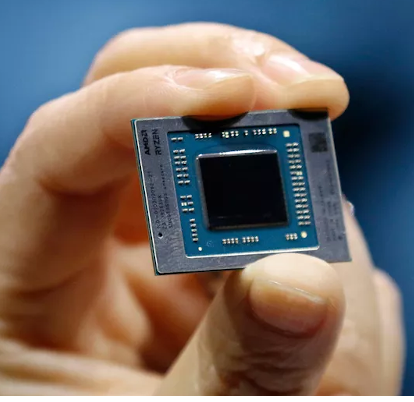
The semiconductor industry is witnessing an exciting era of innovation with the advent of seven nanometer (7 nm) technology. With this revolutionary leap in transistor sizes and chip manufacturing processes, the world is experiencing a significant boost in performance, efficiency, and integration capabilities. In this article, we will explore the concept of nanometer, the applications of seven nanometer technology, its future trends, and the far-reaching impact it holds for various industries.
Understanding Nanometer:
A nanometer is a unit of length, representing one billionth of a meter. To put it in perspective, a single human hair is about 75,000 nanometers thick. In the semiconductor industry, nanometer refers to the distance between transistor gates on a chip. Smaller transistor sizes allow for more advanced and efficient chip designs.
Applications of Seven Nanometer Technology:
Seven nanometer technology has become the cornerstone for the production of high-performance processors used in a wide range of devices. Here are some key areas where this technology finds its application:
1. Consumer Electronics:
Seven nanometer chips power the smartphones, tablets, and wearable devices we rely on daily. These smaller and more efficient transistors enable faster processing speeds, longer battery life, and improved graphics capabilities, enhancing the overall user experience.
2. High-End Computing:
In the realm of high-performance computing, seven nanometer technology enables the production of central processing units (CPUs) and graphics processing units (GPUs) with superior power and computational efficiency. This technology is crucial for demanding applications such as artificial intelligence, data centers, and scientific research.
3. Automotive and Internet of Things (IoT):
The automotive industry greatly benefits from seven nanometer technology. In-car computing systems, advanced driver assistance systems (ADAS), and autonomous driving applications require robust processors with high computing power, low power consumption, and compact sizes—all achievable through seven nanometer technology. Additionally, IoT devices, including smart home systems and industrial sensors, rely on efficient processors to enable seamless connectivity and intelligent operations.
Future Trends and Possibilities:
The future of seven nanometer technology holds immense promise for continued progress and innovation. Here are some key trends to keep an eye on:
1. Shrinking Transistor Sizes:
Semiconductor manufacturers are continuously striving to refine their manufacturing technologies, aiming to push the boundaries of miniaturization. Advances in materials, lithography techniques, and 3D transistor designs are being explored to achieve smaller transistor sizes, enabling even more efficient, powerful, and compact chip designs.
2. Beyond Moore's Law:
For decades, Moore's Law has predicted the doubling of transistor density every two years. While the seven nanometer technology aligns with Moore's Law, it may become increasingly challenging to achieve further scaling beyond this point. However, researchers are exploring alternative technologies such as nanowires, carbon nanotubes, and quantum computing to pave the way for future advancements.
3. Application-Specific Optimization:
As seven nanometer technology matures, semiconductor manufacturers are focusing on optimizing chip designs for specific applications. Customization for areas like AI, machine learning, and specialized computing will become more prevalent. This customization will drive further improvements in performance, energy efficiency, and cost-effectiveness.
Conclusion:
The advent of seven nanometer technology has unleashed a new era of possibilities in the semiconductor industry. From consumer electronics to high-performance computing and beyond, this technology has revolutionized the way we interact with technology. As the industry continues to push the boundaries of innovation, we can expect even more remarkable advancements in the future, opening new horizons for various sectors and shaping the digital landscape for years to come.


Frequently Asked Questions
Related Articles

Raspberry Pi and Microcontrollers Detailed Comparison
A classification to converters
RTX4070 VS RTX4080 VS RTX4090 GPUs Comparison
Introducing the LOONGSON LS3A6000 CPU
Flip-Flop Electronics, How Flip Flops Work, Types, Application,
Basis of Alkaline Batteries, Lithium vs Alkaline Batteries vs Nickel
Electrical Connector Recognition:Types,Construction,Connecting Method
Coaxial Cable: A Versatile Solution for Signal Transmission
The Future of AI: Elon Musk's Concerns and the Birth of xAI Grok
What's the Difference Between Amplifier and Operational Amplifier
How to Fix an iPhone Flashlight That Isn’t Working