TIP36C Vs TIP41C Transistor: Datasheet, Pinout, and Test Circuits
TIP36C Vs TIP41C Transistor: Datasheet, Pinout, and Test Circuits
Catalog
Introduction
TIP36C Description
TIP41C Description
TIP36C Vs TIP41C: Difference in Pinout
TIP36C Vs TIP41C: Difference in CAD Model
TIP36C Vs TIP41C: Difference in Features
TIP36C Vs TIP41C: Difference in Advantages
Specifications
TIP36C Vs TIP41C: Difference in Test Circuits
TIP36C Vs TIP41C: Difference in Functional Alternatives
How to use TIP41C
TIP36C Vs TIP41C: Difference in Application
TIP36C Vs TIP41C: Difference in Package
Datasheet PDF
Introduction:
Transistors are essential components in electronic circuits, serving various purposes such as amplification, switching, and voltage regulation. The TIP36C and TIP41C transistors are commonly used in power applications due to their high current and voltage capabilities. This article aims to provide an overview of these transistors, including their datasheets, pinouts, and test circuit examples.
TIP36C Transistor:
The TIP36C is a PNP bipolar junction transistor designed for general-purpose power amplifier and switching applications. It features a maximum collector current (IC) of 25A and a collector-emitter voltage (VCEO) of 100V. The TIP36C transistor is housed in a TO-247 package, which provides excellent thermal dissipation capabilities.
The TIP36C is a complementary PNP Power Transistor with low collector-emitter saturation voltage. It is manufactured in planar technology with base island layout. The resulting transistor show exceptional high gain performance coupled with very low saturation voltage. Designed for use in audio amplifier and general purpose applications.
Monolithic Darlington configuration.5A Base current.1°C/W Junction-to-case thermal resistance
TIP41C Transistor:
The TIP41C is an NPN bipolar junction transistor that complements the TIP36C. It is also used for power amplification and switching purposes. The TIP41C transistor has a maximum collector current (IC) of 6A and a collector-emitter voltage (VCEO) of 100V. It is packaged in a TO-220 package, which is widely used and easy to handle.
The TIP41C is a base island technology NPN Power Transistor for audio, power linear and switching applications.
Complement to TIP42C.
High Switching Speed.
hFE Improved Linearity.
hFE Grouping
Pinouts:
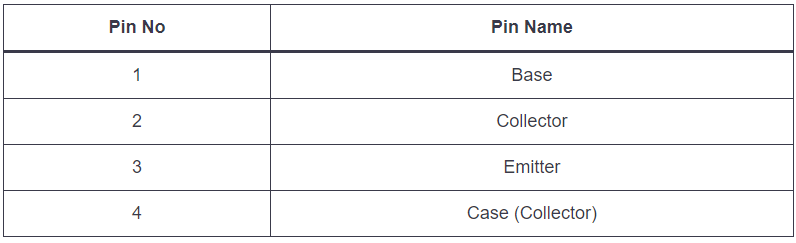
The pinout configuration of the TIP36C and TIP41C transistors is as follows:
TIP36C:


TIP41C:

Test Circuit Examples:
TIP36C Amplifier Circuit:
The TIP36C can be used in audio amplifier circuits. Here’s a simple example of a TIP36C amplifier circuit:
Connect the input audio signal to the base (B) terminal of the TIP36C transistor through a coupling capacitor.
Connect a resistor between the base (B) terminal and the emitter (E) terminal.
Connect the collector © terminal to the positive supply voltage (+Vcc) through a load resistor.
Connect the emitter (E) terminal to the ground (GND).
TIP41C Switching Circuit:
The TIP41C can be used in switching applications. Here’s a basic example of a TIP41C switching circuit:
Connect the base (B) terminal of the TIP41C transistor to the control signal or microcontroller output through a current-limiting resistor.
Connect the collector © terminal to the load or device that needs to be switched.
Connect the emitter (E) terminal to the ground (GND).
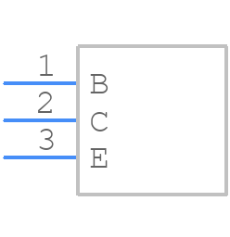
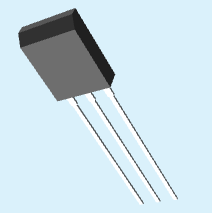
TIP36C Vs TIP41C: Difference in CAD Model
TIP36C
Symbol
Footprint

3D-Model
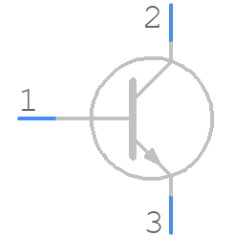
TIP41C
Symbol
Footprint

3D-Model
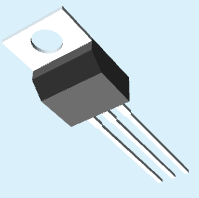
TIP36C Vs TIP41C: Difference in Features
Features
■Low collector-emitter saturation voltage
1 1 Complementary NPN - PNP transistors
Applications
■General purpose
■Audio amplifier
TIP36 Key Features
25 A Collector Current
Low Leakage Current — ICEO = 1.0 mA @ 30 and 60 V
Excellent DC Gain — hFE = 40 Typ @ 15 A
High Current Gain Bandwidth Product — hfe = 3.0 min @ IC = 1.0 A, f = 1.0 M
Type Designator: TIP36C
Material of Transistor: Si
Polarity: PNP
Specification
| Ic (mA) | Pd (mW) | Vce (max) | Vcb | hfe | @Ic | FT (MHz) |
| 25 | 125 | 100 | 100 | 15-75 | 15000 | 3 |
TIP36 Equivalent/Alternate:
TIP100, TIP101, TIP102, TIP105, TIP106, TIP107, TIP110, TIP35C
Application
Power Amplifier
Switching Applications
TIP41C Key Features:
6 A Collector Current
Low Leakage Current — ICEO = 1.0 mA @ 30 and 60 V
Excellent DC Gain — hFE = 15-75 Typ @ 4 A
High Current Gain Bandwidth Product — hfe = 3.0 min @ IC = 0.5 A, f = 1.0 MHz
Type Designator: TIP41C
Material of Transistor: Si
Polarity: NPN
TIP41C Equivalent/Alternate:
TIP42, TIP42A, TIP42B, TIP42C
Specification
TIP41C Application:
Power Amplifier
Switching Applications
The TIP41C is also commonly used in audio amplifier circuits, linear power supplies, and general-purpose switching applications.
It offers a moderate collector current rating and a wide range of DC gain options, making it suitable for various medium-power applications.
TIP36C Vs TIP41C: Difference in Test Circuits
TIP36C Vs TIP41C: Difference in Functional Alternatives
Alternatives:TIP36AG,BD243C,BD243C-S, BNSBD243CS,TIP36CW, 2STA2510, TIP36C-S, NTE393, TIP36CL
TIP36C Vs TIP41C: Difference in Application
TIP36C Vs TIP41C: Difference in Package
Package Type: The TIP36C is available in a TO-247 package, which provides better thermal dissipation and is suitable for high-power applications. The TIP41C is available in a TO-220 package, which is smaller and more commonly used for medium-power applications.
Voltage and Current Ratings: The TIP36C has a higher voltage rating of 100V compared to the TIP41C, which has a voltage rating of 60V.
In terms of current handling, the TIP41C can handle higher collector current (6A) compared to the TIP36C (25A).
Power Dissipation: The TIP36C has a higher power dissipation capability (125W) compared to the TIP41C (65W). This means that the TIP36C
can handle higher power levels without overheating.
Gain and Frequency Response: The TIP36C typically has a higher gain (hFE) compared to the TIP41C, which means it provides higher current
amplification. However, the TIP41C has a slightly wider frequency response range.
Datasheet PDF
Conclusion:
The TIP36C and TIP41C transistors are widely used in power amplifier and switching applications. Their high current and voltage capabilities make them suitable for various electronic projects. By referring to their datasheets, understanding their pinout configurations, and implementing appropriate test circuits, engineers and hobbyists can effectively utilize these transistors in their designs. Whether it’s for amplification or switching purposes, the TIP36C and TIP41C transistors offer reliable performance and versatility.


Related Articles

LMD18200T 3A 55V Motor Controllers: Pinout, Datasheet
ATMEGA328-PU Effecient 8-Bit Microcontrollers: PDF, Pinout
SN6505BDBVR IC transformer Driver: Pinout, PDF and Alternatives