MCP602 vs TL082: What Are the Differences Really
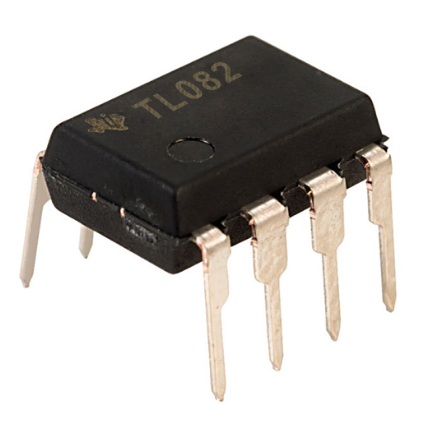
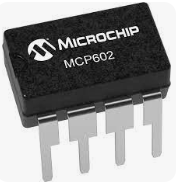
Hi, my dear friends, I will walk you through MCP602 vs TL082: Understanding the Key Differences in feature
This article aims to explore the distinctions between the MCP602 and TL082 op-amps, highlighting their unique features and applications.
Introduction:
Regarding operational amplifiers (op-amps), you’ll find a wide range of options available in the market. Two popular choices are the MCP602 and TL082. While they may appear similar at first glance, it is essential to understand their differences before making a decision. This article aims to explore the distinctions between the MCP602 and TL082 op-amps, highlighting their unique features and applications.
MCP602 vs TL082 Differences in Description
MCP602 Description:
The MCP602 is a dual operational amplifier (op-amp) that is commonly used in various electronic circuits. It operates with a supply voltage range of 2.7V to 5.5V, making it suitable for low-power applications. The MCP602 has low input bias current and low input offset voltage, which helps minimize errors in precision applications. It offers a good combination of low noise performance and high bandwidth, making it suitable for applications such as sensor signal conditioning, audio amplification, and low-power instrumentation. The MCP602 is available in different package types, including DIP and SOIC, providing flexibility for different circuit designs.
TL082 Description:
The TL082 is a dual operational amplifier (op-amp) that is widely used in electronic circuits. It has a wider supply voltage range of ±5V to ±18V, making it suitable for applications that require higher voltage levels. The TL082 offers a good balance between performance and cost-effectiveness. It has a higher bandwidth compared to some other op-amps, allowing for better amplification of higher frequency signals. The TL082 is commonly used in audio applications, active filters, and general-purpose amplification circuits. It is available in various package types, including DIP, SOIC, and TSSOP, providing options for different circuit layouts and requirements.
MCP602 vs TL082 Differences in Pinout
MCP602 Pinout
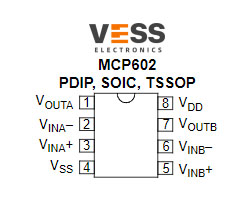
TL082 Pinout

![YJ@[{]$%N8D()MY5XQ8UWNI](https://www.vessic.com/upload/image/content/20231106/250e76c83e5f82036dddb6ba315924f9.png "250e76c83e5f82036dddb6ba315924f9.png")
MCP602 vs TL082 Differences in CAD-Model
MCP602
*Symbol
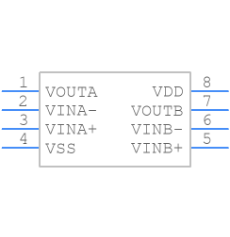
*Footprint
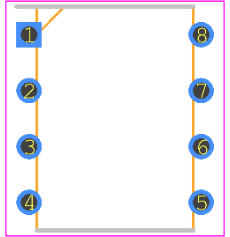
*3D-Model
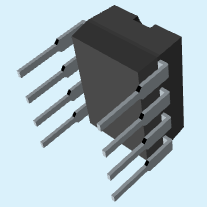
TL082
*Symbol
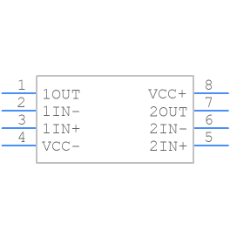
*Footprint

*3D-Model
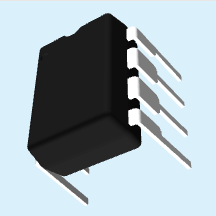
MCP602 vs TL082 Differences in Features
*Technology and Manufacturing:
The MCP602 and TL082 op-amps are manufactured by different companies, utilizing distinct technologies. The MCP602 is produced by Microchip Technology, using a CMOS (Complementary Metal-Oxide-Semiconductor) process. On the other hand, the TL082 is manufactured by Texas Instruments, employing a JFET (Junction Field-Effect Transistor) process. These manufacturing variances result in differences in performance, power consumption, and other characteristics.
*Power Supply Voltage Range:
One of the significant differences between the MCP602 and TL082 is their power supply voltage range. The MCP602 operates over a broader range, typically from 2.7V to 6V. In contrast, the TL082 has a narrower range, typically from ±5V to ±15V. This distinction allows the MCP602 to be more versatile and suitable for low-power applications, while the TL082 is better suited for higher voltage applications.
*Input and Output Characteristics:
The input and output characteristics of op-amps play a crucial role in their performance. The MCP602 offers a rail-to-rail input and output, meaning it can accept and provide signals that are close to the power supply voltage levels. This feature allows for a wider dynamic range and better accuracy in signal processing. The TL082, however, does not have rail-to-rail capabilities, resulting in limited input and output voltage ranges.
*Noise and Distortion:
Op-amps are prone to noise and distortion, which can affect the quality of the output signal. The MCP602 excels in this aspect, as it has lower noise and distortion levels compared to the TL082. This makes the MCP602 more suitable for applications that require high signal fidelity, such as audio amplification and sensor signal conditioning.
*Speed and Bandwidth:
Op-amps differ in their speed and bandwidth capabilities, which determine their ability to process signals at different frequencies. The TL082 has a higher gain bandwidth product (GBP) compared to the MCP602, allowing it to handle higher-frequency signals with greater accuracy. However, the MCP602 offers faster slew rate and settling time, making it more suitable for applications that require fast response times, such as data acquisition systems.
MCP602 vs TL082 Alternatives
MCP602 Equivalent Op-Amp
LM358, TL072, AD822
TL082 Equivalent Op-Amp
TL074, TL072, LM358, LM338
MCP602 vs TL082 Differences in Application
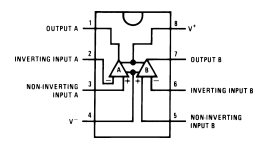
MCP602 vs TL082 Differences in Diagram
MCP602 Diagram
TL082 Diagram
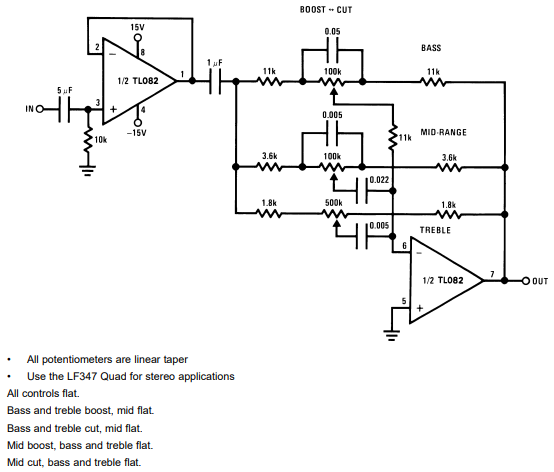
MCP602 vs TL082 Differences in Circuit
MCP602 Circuit
TL082 Circuit
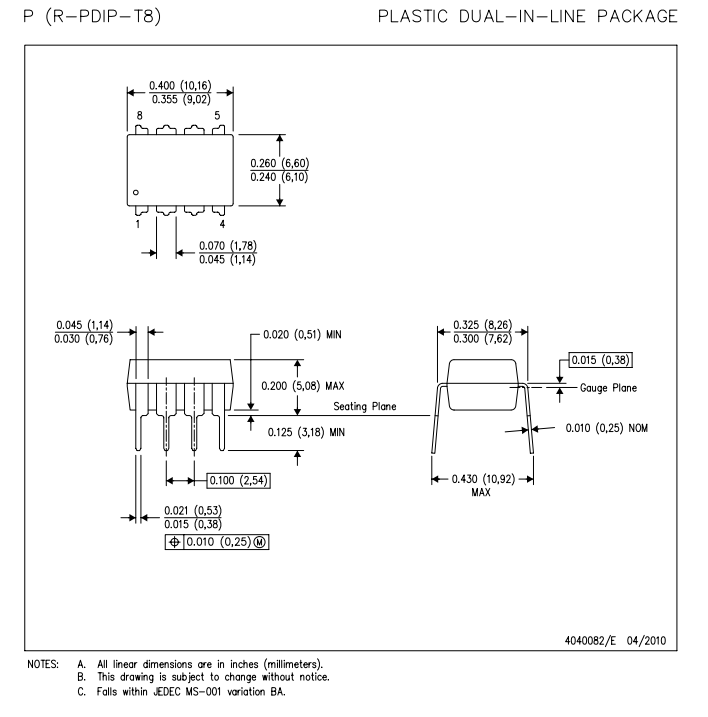
MCP602 vs TL082 Differences in Package
MCP602 Package
TL082 Package
Datasheet PDF
Please DOWNLOAD the datasheets and manufacturer documentation for the MCP602 and TL082.
Specifications
Product Comparison
Conclusion
In summary, the MCP602 and TL082 op-amps have distinct differences that make them suitable for different applications. The MCP602 offers a wider power supply voltage range, rail-to-rail input and output, lower noise and distortion levels, and faster slew rate. On the other hand, the TL082 provides higher gain bandwidth product and is better suited for higher voltage applications. Understanding these differences is crucial in selecting the right op-amp for a specific application, ensuring optimal performance and functionality.


Related Articles

LMD18200T 3A 55V Motor Controllers: Pinout, Datasheet
ATMEGA328-PU Effecient 8-Bit Microcontrollers: PDF, Pinout
SN6505BDBVR IC transformer Driver: Pinout, PDF and Alternatives