RASPBERRY PI 5 VS RASPBERRY PI 4: The Detailed Differences & Similarities
This post is about Raspberry Pi 5 vs Raspberry Pi 4: The Detailed Differences & Similarities
Introduction:

The Raspberry Pi series has been a popular choice for DIY enthusiasts, hobbyists, and developers looking to build innovative projects. With the recent release of the Raspberry Pi 5, it’s time to compare it with its predecessor, the Raspberry Pi 4. This article will delve into the detailed differences and similarities between the two models, helping you understand the improvements and advancements offered by the latest iteration.
![_A[26]`C_UTG7[3D{8PX3]2](/upload/image/content/20231019/70147cdda792e3d2170c31ecb09625ba.png "70147cdda792e3d2170c31ecb09625ba.png")
Performance:
The Raspberry Pi 5 brings significant improvements in performance compared to the Raspberry Pi 4. It features a more powerful processor, increased RAM capacity, and improved graphics capabilities. These enhancements result in faster processing speeds, smoother multitasking, and improved overall performance.
Processor:
While the Raspberry Pi 4 is equipped with a Broadcom BCM2711 quad-core Cortex-A72 processor, the Raspberry Pi 5 boasts a more advanced processor, such as the Broadcom BCM2711B0 quad-core Cortex-A76 CPU. The upgraded processor in the Raspberry Pi 5 offers better performance and efficiency.
Memory:
The Raspberry Pi 4 is available in different RAM configurations, ranging from 2GB to 8GB. On the other hand, the Raspberry Pi 5 comes with a minimum of 4GB RAM, ensuring better memory management and allowing for more demanding applications and tasks.
Connectivity:
Both models offer similar connectivity options, including USB ports, Ethernet, Wi-Fi, and Bluetooth. However, the Raspberry Pi 5 may introduce improvements in connectivity features, such as faster USB ports or enhanced wireless capabilities, depending on the specific model and version.
Graphics:
The Raspberry Pi 5 is expected to provide enhanced graphics capabilities, enabling smoother video playback, improved gaming experiences, and support for higher resolutions. This is a notable upgrade compared to the Raspberry Pi 4, which already offered decent graphics performance.
Form Factor and Compatibility:
In terms of form factor, the Raspberry Pi 5 is likely to maintain the same dimensions and compatibility with previous models, including the GPIO (General Purpose Input/Output) pin configuration. This allows for seamless integration with existing projects and accessories designed for earlier Raspberry Pi versions.
Software and Community Support:
Both the Raspberry Pi 4 and Raspberry Pi 5 benefit from strong community support and a vast ecosystem of software and projects. The availability of open-source software, tutorials, and community forums ensures that users can find resources and assistance for their projects regardless of the model they choose.
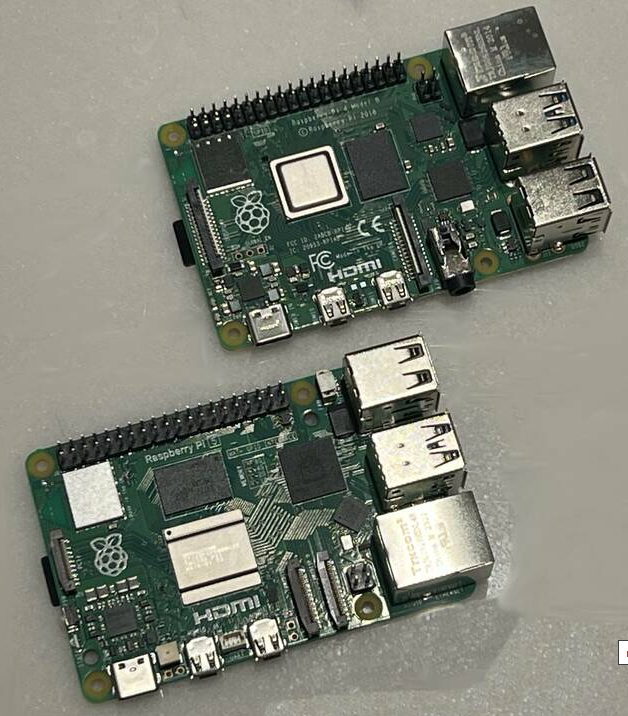
Here are some additional features and aspects to consider when comparing the Raspberry Pi 5 and Raspberry Pi 4:
Storage Options: Both models support microSD card storage for the operating system and user data. However, the Raspberry Pi 5 might introduce additional storage options, such as onboard eMMC storage or improved support for external storage devices.
Power Efficiency: The Raspberry Pi 5 might offer improved power efficiency compared to the Raspberry Pi 4, resulting in lower power consumption and longer battery life in portable projects.
Cooling and Thermal Management: The Raspberry Pi 5 might incorporate better thermal management solutions, such as improved heat sinks or fans, to handle increased performance and prevent overheating.
Video Output: While the Raspberry Pi 4 supports dual 4K displays, the Raspberry Pi 5 might provide enhanced video output capabilities, such as support for higher refresh rates or additional display connectivity options.
Operating System Compatibility: Both models are compatible with various operating systems, including Linux distributions like Raspbian and Ubuntu. However, the Raspberry Pi 5 might introduce compatibility with newer operating system versions or additional options.
Price: Consider the price point of each model, as the Raspberry Pi 5 might be priced higher due to its improved specifications and performance.
Availability: The Raspberry Pi 4 has been available for some time, ensuring its widespread availability and compatibility with various accessories. The Raspberry Pi 5 might initially have limited availability or face supply constraints upon release.
Future Upgrades: Consider the future upgrade possibilities for each model. The Raspberry Pi Foundation has a history of releasing incremental updates and improved versions, so it’s worth considering the potential for future upgrades and compatibility with upcoming models.
Conclusion:
The Raspberry Pi 5 brings notable advancements in performance, processor, memory, and graphics capabilities compared to its predecessor, the Raspberry Pi 4. These improvements allow for faster processing, improved multitasking, and enhanced overall performance. However, it’s important to consider specific requirements and project needs when choosing between the two models. Regardless of the choice, both the Raspberry Pi 4 and Raspberry Pi 5 offer a versatile and affordable platform for a wide range of DIY projects and applications.


Related Articles

Multiplexing In Networking:Multiplexing & Demultiplexing Examples
How MOSFETS Work?Know Everything About Mosfet:Types,Operation
What Are Biosensors Used For And How Does It Work?
What is a Voltage divider? Function, Formula, Application
What are Different Types of DB Connectors: DB9,DB15,DB25,DB37,DB50
Types of Switches: A Guide to Understanding and Utilizing Them
How Does An IGBT Rectifier Work?
How to Connect to an FTP with a Different Port
Understanding IMU: A Beginner's Guide to Inertial Measurement Units
Exploring the Capabilities of Google's Gemini AI Model: Is It the Best?
Brushless DC (BLDC) Motor Explained:Working Principles, Structure