Brushless DC (BLDC) Motor Explained:Working Principles, Structure
This post could provide you some basic info about Brushless DC Motor

Catalog
What are Brushless DC (BLDC)Motors?
BLDC Motor structure
Different Types of Motors(common types)
How BLDC Motor Works?
Common Motor Types
Advantages of BLDC Motors
Applications of BLDC Motors
Brushless DC Motor Typical Applications
Brushless Vs Brushed DC Motor: Differences
Introduction:
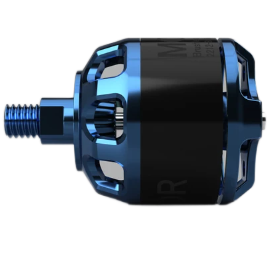
Brushless DC (BLDC) motors, also known as electronically commutated motors, have gained significant popularity in various industries due to their efficiency, reliability, and precise control. In this article, we will delve into the working principles, structure, advantages, and applications of BLDC motors. Additionally, we will compare them with brushed DC motors to highlight their differences.
1. BLDC Motor Structure:
The structure of a BLDC motor comprises a rotor with permanent magnets and a stator with windings. The rotor can be either an external rotor or an internal rotor, depending on the motor design. The stator consists of multiple coils that are energized in a specific sequence to provide continuous rotation.
2. How BLDC Motors Work:
BLDC motors operate based on the interaction between the rotor's permanent magnets and the stator's magnetic field. The stator's windings are energized using electronic commutation to create a rotating magnetic field, which interacts with the permanent magnets, causing the rotor to rotate. This electronic commutation eliminates the need for brushes and commutators used in traditional brushed DC motors.
3. Common Motor Types:
In addition to BLDC motors, there are various other motor types commonly used in different applications. These include brushed DC motors, induction motors, synchronous motors, and stepper motors. Each motor type has its own advantages and specific use cases.
BLDC Motor Types
BLDC (Brushless DC) motors can be divided into different types based on various factors. Here are some commonly recognized types:
1. Outer Rotor BLDC Motor: In this type, the rotor is located on the outer side of the motor, while the stator is positioned inside. This design offers compactness and higher torque.
2. Inner Rotor BLDC Motor: Here, the rotor is positioned inside the stator, and the outer casing surrounds them. Inner rotor BLDC motors generally provide higher speeds and lower inertia.
3. Slotted BLDC Motor: This type of motor has slots on the stator core where the windings are placed. The slots help in the proper distribution of magnetic flux and improve motor performance.
4. Slotless BLDC Motor: In contrast to slotted BLDC motors, slotless motors do not have slots on the stator. This design reduces cogging torque and allows for smoother operation with lower torque ripple.
5. Axial Flux BLDC Motor: Axial flux motors have a unique structure where the magnetic flux flows radially, parallel to the axis of rotation. This design offers high power density and compactness.
6. Radial Flux BLDC Motor: In radial flux motors, the magnetic flux flows radially, perpendicular to the axis of rotation. They are commonly used in various applications and offer good efficiency and torque characteristics.
It's worth noting that these types can often overlap or be customized for specific applications, and manufacturers may have their own naming conventions.
4. Advantages of BLDC Motors:

BLDC motors offer several advantages over traditional brushed DC motors, including higher efficiency, longer lifespan, lower maintenance requirements, and improved speed control. The absence of brushes and commutators reduces wear and eliminates the need for regular maintenance, making BLDC motors ideal for applications requiring continuous operation.
5. Applications of BLDC Motors:
BLDC motors find applications in a wide range of industries, such as automotive (electric vehicles, HVAC systems), aerospace (actuators, pumps), robotics (joint movements, grippers), industrial automation (conveyors, packaging machines), and consumer electronics (HVAC fans, appliances). Their compact size, high torque density, and precise control make them suitable for numerous demanding applications.
Anti-lock braking systems
Disk drive servos
Throttle controls
Fuel pumps
Oil pumps
6. Brushless vs. Brushed DC Motors: Differences:
Comparing BLDC motors with brushed DC motors reveals significant differences in terms of construction, efficiency, maintenance, and control. Brushless motors have a higher efficiency due to reduced friction, offer better speed control, and have longer lifespans. On the other hand, brushed DC motors are simpler in construction, lower in cost, and provide less precise control.
Conclusion:
Brushless DC (BLDC) motors have revolutionized various industries with their superior performance, efficiency, and reliability. Their electronic commutation and brushless design offer significant advantages over traditional brushed DC motors. By understanding the working principles and structure of BLDC motors, we can appreciate their wide range of applications and their potential to drive innovation in the future.


Frequently Asked Questions
Related Articles

Multiplexing In Networking:Multiplexing & Demultiplexing Examples
How MOSFETS Work?Know Everything About Mosfet:Types,Operation
What Are Biosensors Used For And How Does It Work?
What is a Voltage divider? Function, Formula, Application
What are Different Types of DB Connectors: DB9,DB15,DB25,DB37,DB50
Types of Switches: A Guide to Understanding and Utilizing Them
How Does An IGBT Rectifier Work?
How to Connect to an FTP with a Different Port
Understanding IMU: A Beginner's Guide to Inertial Measurement Units
Exploring the Capabilities of Google's Gemini AI Model: Is It the Best?
Brushless DC (BLDC) Motor Explained:Working Principles, Structure