Active Vs Passive Components: Comparison
Hello, friends. This post will give you a brief introduction about the difference between Passive Components and Active Components.
Catalog
Introduction
What Are Active Components?
What Are Passive Components?
Differences and Applications
Functions of Active Devices
Functions of Passive Devices
Conclusion
Introduction:
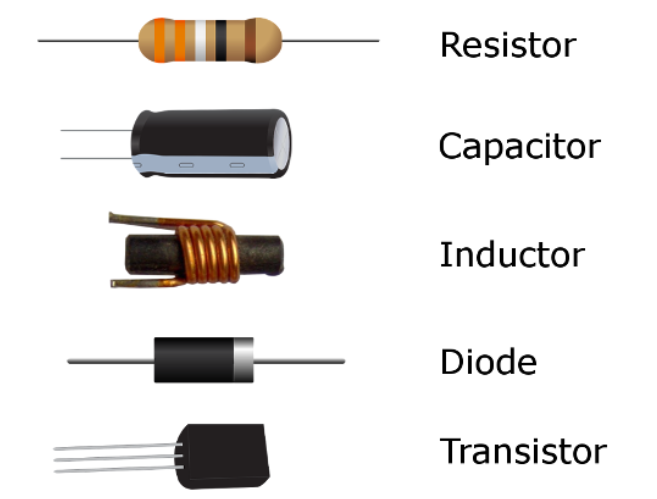
In the world of electronics, components play a vital role in the functioning of various devices. These components can be broadly classified into two categories: active components and passive components. Understanding the differences between these two types is essential for anyone interested in electronics. In this article, we will delve into the characteristics and applications of active and passive components.
What Are Active Components?
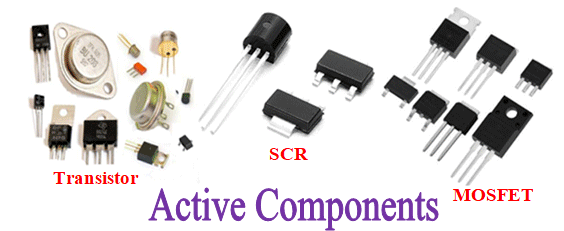
Active components are electronic devices that can control the flow of electrical current. These components require a power source to operate and are capable of amplifying, switching, or processing electrical signals. The most common active component is the transistor, which is widely used in electronic circuits.
Transistors are responsible for amplifying weak signals, acting as switches, and serving as the building blocks of digital logic circuits. They are available in various types, such as bipolar junction transistors (BJTs) and field-effect transistors (FETs). Active components also include integrated circuits (ICs), operational amplifiers (op-amps), and microcontrollers.
Active devices include, but are not limited to, vacuum tubes, transistors, silicon-controlled rectifiers (SCRs), and TRIACs.
What Are Passive Components?
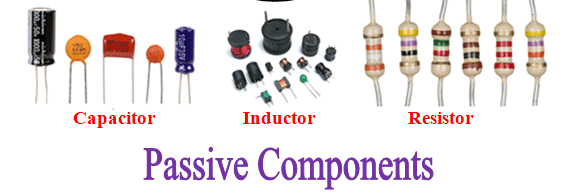
Passive components, on the other hand, do not require a power source and cannot control the flow of electrical current. These components primarily store, filter, or dissipate energy. Passive components do not amplify or process signals but play a crucial role in shaping and conditioning electrical signals.
Capacitors, Resistors, inductors, transformers, and even diodes are all considered passive devices. Resistors limit the flow of current in a circuit, capacitors store and release electrical energy, and inductors store energy in a magnetic field. These components are widely used in various applications, such as filtering noise, timing circuits, voltage regulation, and impedance matching.
Differences and Applications:
The main difference between active and passive components lies in their ability to control the flow of electrical current. Active components, such as transistors, have the capability to amplify, switch, or process electrical signals. They are commonly used in amplifiers, oscillators, digital circuits, and power supplies.
Passive components, on the other hand, cannot control the flow of current but serve important functions in electronic circuits. Resistors are used to limit current and voltage, capacitors store and release energy, and inductors store energy in a magnetic field. These components are widely used in filters, timing circuits, power supplies, and signal conditioning.
Functions of Active Devices
Amplification: Active devices, such as transistors and operational amplifiers, are capable of amplifying weak electrical signals. This amplification allows for signal conditioning, boosting the strength of signals for further processing or transmission.
Switching: Active devices can act as switches, controlling the flow of current in an electronic circuit. Transistors, for example, can be used to turn on or off the flow of current based on the input signal, enabling digital logic operations and controlling the operation of various electronic systems.
Signal Processing: Active devices are used for various signal processing tasks, such as modulation, demodulation, filtering, and frequency conversion. They can modify the characteristics of electrical signals to achieve specific objectives, such as removing noise, extracting information, or converting signals from one form to another.
Oscillation: Active devices are crucial in generating and controlling oscillations in electronic circuits. Oscillators, which are built using active components like transistors or operational amplifiers, produce continuous waveforms of specific frequencies and are used in applications such as signal generation, timing circuits, and frequency synthesis.
Control and Regulation: Active devices play a vital role in control and regulation systems. They can be used in feedback loops to monitor and adjust system parameters, ensuring stability and desired performance. Active devices like microcontrollers are widely used in automation, robotics, and control systems.
Functions of Passive Devices
Energy Storage: Passive devices such as capacitors and inductors store electrical energy. Capacitors store energy in an electric field, while inductors store energy in a magnetic field. They can release stored energy when needed, providing power to other components or maintaining stable voltage levels.
Filtering: Passive devices are used for filtering unwanted signals or noise from electrical circuits. Resistors, capacitors, and inductors can be combined to create filters that allow specific frequencies to pass through while attenuating others. This enables the extraction of desired signals or the removal of unwanted noise.
Voltage and Current Limiting: Resistors are commonly used to limit the flow of current or voltage in a circuit. They provide resistance and help protect components from excessive current or voltage levels. Resistors also play a role in voltage dividers, which are used to obtain specific voltage levels in a circuit.
Timing and Frequency Control: Passive devices like capacitors and resistors are used in timing circuits and frequency control applications. Capacitors and resistors can be combined to create timing circuits that determine the duration of events or the frequency of oscillations in electronic systems.
Impedance Matching: Passive devices are used to match the impedance between different components or systems. This ensures maximum power transfer and minimizes signal reflections. Transformers, for example, are passive devices that enable impedance matching in electrical power transmission and audio systems.
It is worth noting that while active devices actively control or manipulate electrical signals, passive devices primarily store, filter, or regulate energy without actively controlling the flow of current. Both active and passive devices are essential in electronic circuits, and their proper integration allows for the design and implementation of complex electronic systems.
Conclusion:
Active and passive components are essential building blocks of electronic circuits. While active components control the flow of electrical current and process signals, passive components store, filter, or dissipate energy. Understanding the characteristics and applications of these components is crucial for designing and troubleshooting electronic systems. By utilizing the right combination of active and passive components, engineers and enthusiasts can create innovative and efficient electronic devices.


Frequently Asked Questions
Related Articles

Multiplexing In Networking:Multiplexing & Demultiplexing Examples
How MOSFETS Work?Know Everything About Mosfet:Types,Operation
What Are Biosensors Used For And How Does It Work?
What is a Voltage divider? Function, Formula, Application
What are Different Types of DB Connectors: DB9,DB15,DB25,DB37,DB50
Types of Switches: A Guide to Understanding and Utilizing Them
How Does An IGBT Rectifier Work?
How to Connect to an FTP with a Different Port
Understanding IMU: A Beginner's Guide to Inertial Measurement Units
Exploring the Capabilities of Google's Gemini AI Model: Is It the Best?
Brushless DC (BLDC) Motor Explained:Working Principles, Structure